Get Full Government Meeting Transcripts, Videos, & Alerts Forever!
Get email alerts on the Conservation Land Management topic
No spam. Unsubscribe anytime.
Conservation staff describe prairie restorations, invasive plant removals and prescribed burns
Summary
Conservation staff reviewed work on Muskego’s conservation sites: invasive-species removal (notably buckthorn), prairie reconstruction by seeding and prescribed burns, volunteer involvement, and the discovery of remnant prairie plants at a Bridal‑site area.
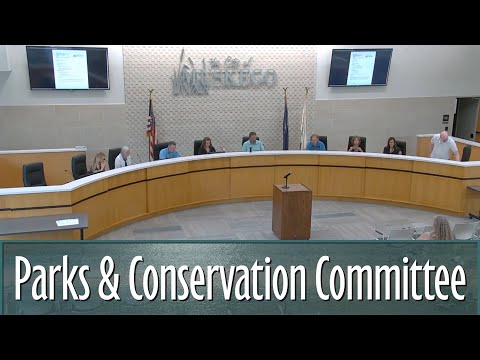
MUSKEGO — Conservation staff gave a detailed overview of land-management work across Muskego’s conservation sites, focusing on invasive-species control, prairie reconstruction and use of prescribed fire to restore native plant communities.
Tom (conservation staff) told the committee Muskego manages 28 conservation sites totaling about 580 acres; he said the DNR holds roughly 1,000 acres in the area and there are “500 plus acres of private conservancy land.” He emphasized that historical land use reduced native prairies and savannas: “1 tenth of 1% of prairie remains right now,” he said, and added that restoring remaining patches is a priority.
Tom said crews have been cutting and treating invasive buckthorn by applying herbicide to stems and either chipping, removing or piling and burning cut material. He showed before-and-after photos from a Bridal‑site hillside near Batai/Batai Ship Reserve (as presented) where removing buckthorn revealed remnant prairie and savanna plants: “Allowing the sunlight, it just it just shot open with, with all these blossoming plants,” Tom said.
The department uses prescribed fire as a management tool and described training and safety protocols: burn plans, weather monitoring, personal protective equipment, fire breaks and controlled ignition patterns (backing, flanking and occasional head fires when safe). Tom said burns reduce woody encroachment, support prairie species, and can lower tick abundance in burned areas. He noted that burn cycles are planned and sometimes sites are skipped a year to provide insect refuges.
Staff discussed seed‑mixing and seeding methods used to reconstruct prairies and volunteer engagement — including high‑school groups that collected and spread seed. The presentation identified a list of common invasive plants staff are treating (buckthorn, garlic mustard, teasel, Canada thistle, phragmites, dame's rocket) and explained control methods and safety precautions for species like wild parsnip, whose sap can cause severe skin reactions.
Tom encouraged committee members and residents to visit conservation areas such as Badisher/Badisher (presented under several spellings) and Engle Conservation Area to see restored plantings and trails. He closed by inviting volunteers and noting scheduled and past burns; committee members asked about burn frequency and timing, and he replied that some sites are burned on cycles and that the team last burned in March at some locations.
No formal committee action was taken on conservation items during the meeting.