Get Full Government Meeting Transcripts, Videos, & Alerts Forever!
Get email alerts on the Budget And Compensation topic
No spam. Unsubscribe anytime.
Humble ISD board adopts balanced 2025–26 budget and approves compensation plan including teacher raises
Summary
The Humble Independent School District Board of Trustees on a special meeting approved the 2025–26 general, child nutrition and debt service budgets and a compensation plan that implements state-mandated teacher allotments and district raises for other staff.
The Humble Independent School District Board of Trustees voted to adopt the 2025–26 budget and an accompanying compensation plan at a special public meeting. The district presented a balanced general-fund budget and recommended pay adjustments that reflect recent state legislation and local equity analyses.
The board adopted the general fund, National School Breakfast and Lunch Program fund (child nutrition) and debt service budgets as presented. The board also approved a district compensation plan that applies the state’s teacher allotment (the $2,500–$5,000 per-teacher teacher incentive allotment described in House Bill 2) and a district-funded 3% market adjustment for most nonclassroom staff and certain equity adjustments for under-market positions.
The budget presentation noted the district expects roughly $52 million in new state funding across the biennium from HB 2, with about $26 million available in 2025–26. District staff said that new money is largely spoken for by mandated allotments and one-time transitional items.
“Of the $52 million, about $26 million is new money in 25–26; the state must fund that for two years,” said Billy Beatty, who presented the district’s budget analysis. Beatty told trustees the recommended operating budget for 2025–26 is balanced with a modest surplus after including the state allotments and targeted local adjustments.
State Representative Charles Cunningham gave a legislative overview to the board before the vote, saying the session increased teacher compensation funding and added support for special education and other allotments. “Four billion is going to be for teachers’ compensation. Five hundred million for support staff — and yes, that does include librarians,” Cunningham told the board and audience.
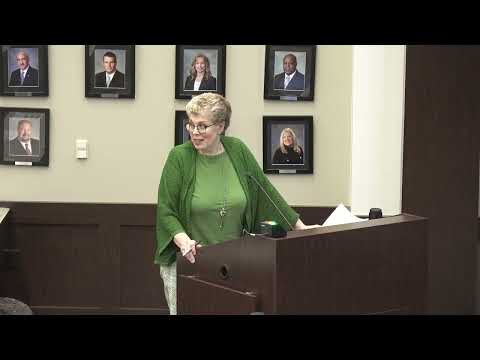
During the public hearing portion of the meeting, several community members urged the board to use discretionary funds to raise pay for librarians and other non-PEIMS classroom staff not automatically covered by the state mandated teacher allotment. “We teach every child in the entire building,” Elm Grove Elementary librarian Tonia Anahosa May said. “Please treat us like classroom teachers — we are teachers.”
A member of the public, Larissa Powell, criticized the board’s past fiscal decisions and called the district’s legal expenses and other items a drain on resources. “F in fiduciary responsibility. A $7,000,000 deficit is a five-alarm financial fire,” Powell said during public comment. The board limited public comment to items on the budget and allowed three minutes per speaker.
District staff said the compensation plan includes: the state-directed teacher allotment (with $2,500 for teachers with three to four years of experience and $5,000 for five-plus years where applicable), a district recommendation to raise starting teacher pay to about $66,000, a 3% increase for most nonclassroom staff, targeted equity adjustments for under-market positions (including some manual trades and police officers) and a proposed longevity stipend for campus police.
The child nutrition fund was presented with a planned, one-time deficit to spend federal funds and upgrade equipment the district said is necessary to modernize meal preparation and lines. Debt service was presented as balanced and tied to the district’s existing bond schedule.
Board members asked staff about the district’s exposure to enrollment and attendance changes; Beatty stressed that small percentage shifts in average daily attendance have large budgetary impacts — he said roughly a half-percent increase in ADA would be about $2 million in revenue and a full percent would be about $4 million.
After discussion the board approved the budgets and the compensation plan. The motions passed and the administration was authorized to implement the adopted budget effective July 1, with salary changes to appear on the July–September payrolls as appropriate.
The budget adoption is the start of a multi-year planning process, district staff said, and administrators will continue work this year to prepare for 2026–27 and beyond as some state allotments phase or change.