State audit finds gaps in Mine Subsidence Protection Program; DRMS lays out multi-year fixes
Summary
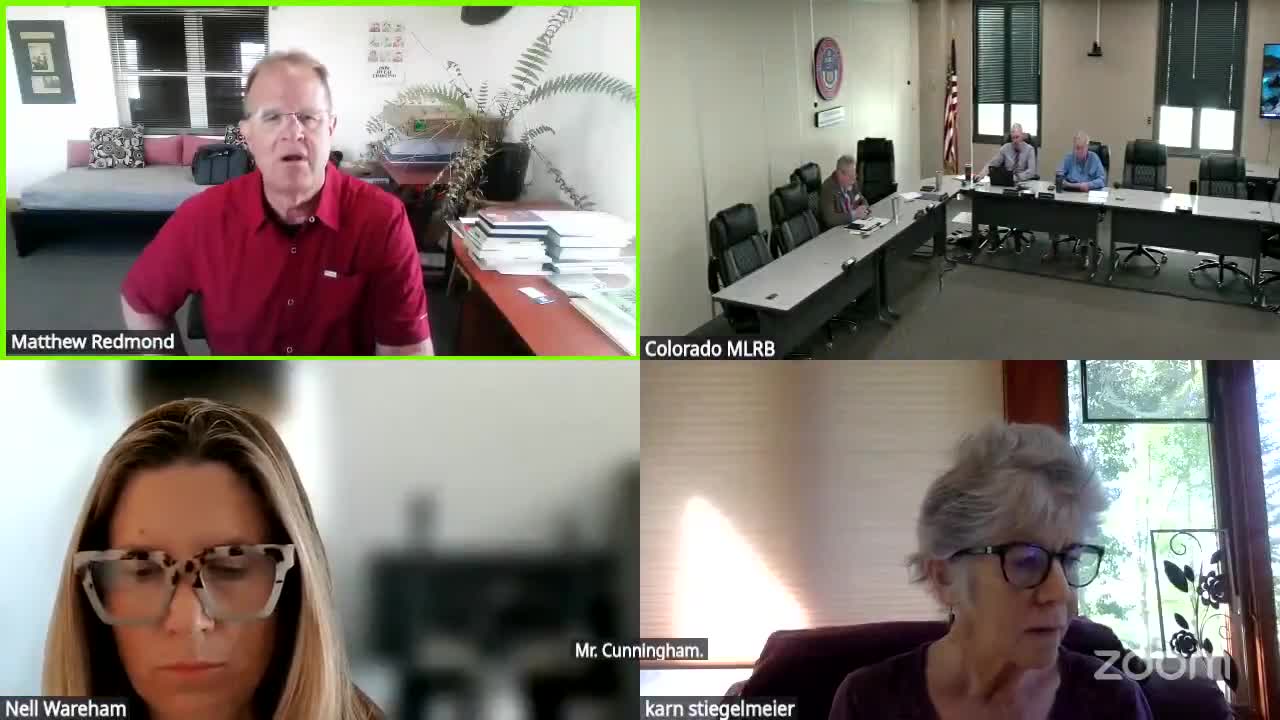
Michael Cunningham, director at the Colorado Division of Reclamation, Mining and Safety, told the Mined Land Reclamation Board on June 18 that the division will implement seven findings from a May 2025 Office of the State Auditor performance audit of the Mine Subsidence Protection Program.
Michael Cunningham, director at the Colorado Division of Reclamation, Mining and Safety (DRMS), told the Mined Land Reclamation Board on June 18 that the division will move to implement seven findings from a May 2025 performance audit of the Mine Subsidence Protection Program by the Office of the State Auditor.
The audit, requested by the Legislative Audit Committee in 2024, found the program largely follows its rules but identified areas where written procedures, federal agreements and program rules were out of alignment with current practice, Heidi Wagner, the Office of the State Auditor project supervisor, told the board.
The audit matters because the program operates as a state trust that uses a mix of participant fees and trust assets to inspect homes, adjudicate claims and pay awards for mine subsidence damage. The audit authors and DRMS staff said inconsistent rules and expired federal agreements create legal and operational risk and can confuse homeowners and staff.
DRMS told the board it has already set implementation targets for a set of near- and longer-term actions. The near-term items include renewing the memorandum of understanding and updating the program’s plan of operations with the Office of Surface Mining Reclamation and Enforcement (OSMRE) by December 2025, and completing a comparative analysis of program rules and establishing written standard operating procedures by June 2026. DRMS also committed to review contractor use for home inspections and to develop guidance on maximum inspection expenditures by December 2025.
Board members heard specific audit findings: the program has operated under an expired MOU with OSMRE; some board rule changes were not furnished to OSMRE as required by the plan of operations; practice for resolving claims disputes differs from the board rule that allows a homeowner to petition the board within 30 days of a denial; and the program has allowed flexibility on the 90-day claim filing window because subsidence damage can be gradual and homeowners often cannot specify an exact occurrence date.
DRMS staff told the board those differences create risks, including the theoretical risk of adverse federal action if the state is out of step with the MOU, though OSMRE staff communicated no immediate concern. "We will be working with them to update our MOU as well as the plan of operations," Cunningham said.
The auditors also analyzed program performance and structure. They found participation has declined since the program’s early years: of 861 homes eligible as of July 2024, about 14% were enrolled, DRMS staff said. Historical enrollment was higher: records show 1,074 homes enrolled in 1996. Since 2010, auditors reviewed 128 filed claims and found 18 claims (about 14%) approved and paid. The program approved far fewer claims in recent years, approving 2 of 45 claims (about 4%) received in fiscal years 2021–2024, the audit report said.
DRMS staff noted the state’s comparatively low subsidence risk is a factor: most Colorado mining ceased decades ago and risk diminishes over time. "Once we get past a period of about 40 years, the likelihood of those subsidence events occurring significantly starts to drop off," Cunningham said.
The auditors also flagged rising program costs. DRMS reported program costs increased from about $114,000 in fiscal 2021 to $324,000 in fiscal 2024, with much of the rise attributed to inspection spending. DRMS told the board a contractor, Tetra Tech, provides inspection work and that the agency will evaluate whether lower-cost inspection options (for example, less-technical enrollment inspections) are appropriate while preserving rigorous technical reviews where needed.
DRMS agreed with the audit’s recommendations and described a staged plan: (1) commission a current risk evaluation and market analysis to assess alternative program structures and eligibility (implementation target June 2026); (2) review inspection workflows and contractor use and propose spending limits for inspection types (December 2025); (3) use findings from those steps to assess structural changes to improve sustainability and participation and then, if needed, pursue rule or statutory changes with the board, OSMRE and the General Assembly (target December 2026).
Board members asked about costs and enrollment mechanics. Cunningham said enrollment requires a $35 payment spread over three years and an additional $200 fee was also referenced in the discussion as part of enrollment processing. The division said it has used direct mailings, door hangers and homeowner association outreach to boost participation and plans additional outreach work.
DRMS emphasized the audit was collaborative and said agency staff will return to the board in the coming months with implementation updates and materials for the decisions the audit sets up, including procurement of outside technical expertise for risk modeling if the board approves using trust funds for that purpose.
The audit report and the division’s proposed implementation schedule are public and were provided in the June meeting packet. DRMS and audit staff said the Legislative Audit Committee voted to release the audit on Monday, June 16, and the program will continue staged engagement with the board as the division executes the implementation timeline.
Ending: The division scheduled follow-up briefings as it advances the risk evaluation, contractor-review and rule-alignment work. Staff told the board they expect to bring decisions about contracting for the risk study and any rule amendments back to the board for review and formal action later in 2025 and 2026.