Get Full Government Meeting Transcripts, Videos, & Alerts Forever!
Get email alerts on the Superintendent Evaluation topic
No spam. Unsubscribe anytime.
Subcommittee approves process to complete superintendent's year‑one evaluation; chair, vice chair to set goals
Summary
The Springfield City Legislative & Contract Subcommittee voted June 18 to recommend a process to the full school committee for completing the superintendent's year‑one evaluation, directing the chair, vice chair and the superintendent to set goals and to follow the DESE evaluation standards; timeline will be revisited in August.
SPRINGFIELD — The Legislative & Contract Subcommittee of the Springfield City School Committee voted June 18 to recommend a process and timeline to the full school committee for completing the year‑one evaluation of the superintendent and directed that the superintendent’s evaluation goals be set by the chair, the vice chair and the superintendent.
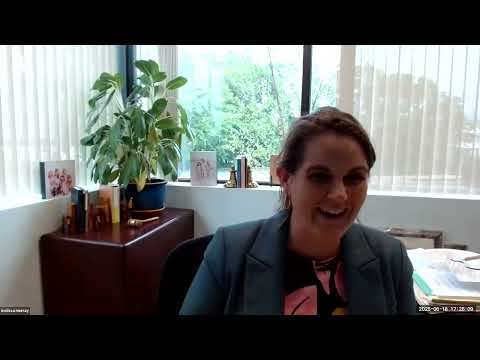
The subcommittee met at the Springfield Public School boardroom after technical difficulties at City Hall. Attorney Melissa Murray, who advised the panel on statutory and procedural points, told members the superintendent’s contract references the Department of Elementary and Secondary Education (DESE) model evaluation and a summative DESE form as the applicable framework. “There is a end of cycle summative evaluation report that DESE puts out that, you know, we could agree to use,” Attorney Murray said.
The vote sends a recommendation to the full school committee and sets next steps on a schedule the members said they will firm up at the August 21 meeting. Subcommittee members agreed the chair, the vice chair and Superintendent Dr. Nunal should meet to develop measurable goals for the evaluation promptly; several members asked that goal‑setting be completed by mid‑to‑late July if calendars allow so the superintendent has time to prepare evidence for the public presentation.
Why it matters: The subcommittee’s action clarifies who will set the superintendent’s goals this cycle, ties the evaluation to the DESE standards the district has used in prior years, and establishes a near‑term calendar for completing evaluation steps. Members emphasized the timing of statewide assessment data — including MCAS and cohort graduation rates — affects when some evaluation measures will be available and how the committee might handle retroactive compensation decisions.
Key points from the meeting
Attorney Melissa Murray outlined the typical evaluation sequence: the superintendent compiles evidence on agreed goals; the superintendent presents that evidence at a public meeting; committee members receive the DESE evaluation tool and are given about 10 days to submit individual evaluation reports; an appointed designee aggregates those reports into a composite summative evaluation for public discussion. “It is good if that person is not a member … not one of the people who is also contributing to the evaluation,” Murray said of the person who compiles individual reports.
Subcommittee members debated which assessment measures to include. Several members spoke in favor of retaining MCAS as a standardized yardstick at elementary and middle grades, while others noted that changes in graduation competency determinations and the timing of cohort graduation data complicate use of certain high‑school measures this year. Chief Williams, who oversees human resources, was cited as the staff member most familiar with timelines for administrator evaluations and retroactive compensation adjustments.
On timetable and logistics the subcommittee agreed on several procedural points: use DESE’s standards and indicators as the evaluation framework; designate an objective designee (commonly the executive or administrative assistant, or in‑house counsel) to compile individual evaluation instruments into a composite; aim to set goals quickly (the subcommittee discussed a mid‑July target) so evidence can be assembled in time for an autumn public presentation; and revisit and finalize specific dates at the August 21 meeting after DESE data availability is confirmed.
Vote and next steps
The subcommittee recorded a motion to recommend that the chair, the vice chair and the superintendent set the superintendent’s evaluation goals, to use the DESE standards as the evaluation framework, and to return to the full school committee with a recommendation and timeline. The vote on that motion was recorded as: Mister Collins — yes; Mister O'Neilier — yes; Miss Hurst — absent. The item will be placed on the full school committee agenda for formal approval; the subcommittee said it will revisit the precise timeline at its August 21 meeting and seek to have goals set by mid‑ to late July if calendars permit.
Quotes
“One of the things we wanted to talk about today was the superintendent’s evaluation,” Attorney Melissa Murray said when presenting the background on the DESE tool.
“I want her … to get it done so that we don't … there's no chance that the superintendent can't get an evaluation and can't get a raise because we didn't set the goals,” Mister Collins said during the discussion.
“ I do. I feel supported, and I feel as if this is a process that is equitable, and I'm fine with the decision for sure,” Superintendent Dr. Nunal said after members agreed on the approach.
Context and background
The superintendent’s employment contract references the DESE model evaluation and the district has used DESE‑aligned tools in prior years, applying four DESE performance standards (instructional leadership; management and operations; family and community engagement; professional culture). Subcommittee members noted that some outcome measures — specifically MCAS scores and cohort graduation rates — are released on timelines set by the state, which can require the committee to use prior‑year measures or to apply retroactive adjustments when state data become available.
What to watch next
The subcommittee will place the recommendation on the full school committee agenda for formal approval. Members said they will finalize calendar dates at the August 21 meeting and asked the chair, vice chair and superintendent to complete goal‑setting as promptly as possible, aiming for mid‑ to late July. The committee will also designate who will compile individual evaluation tools into the public composite — typically the executive assistant or in‑house counsel — and will follow the DESE end‑of‑cycle summative process when preparing the public evaluation report.