Fort Atkinson projects roughly $500,000 deficit for 2025–26 but fund balance remains healthy
Loading...
Summary
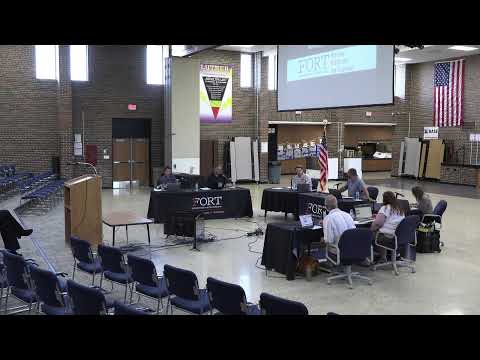
Nathan Knitt, director of business services for the Fort Atkinson School District, presented a preliminary 2025–26 general fund budget on June 19 that projects an operating deficit of about $500,000 while reporting a multi‑year fund balance the administration described as "very healthy."
Nathan Knitt, director of business services for the Fort Atkinson School District, presented a preliminary 2025–26 general fund budget to the Board of Education on June 19, 2025, saying the district currently projects about a $500,000 operating deficit for the coming year while maintaining a multi‑year fund balance the administration called “very healthy.”
Knitt told the board the district is projecting $43,700,000 in general fund revenues for 2025–26 and is seeing expenses rise because of assumptions that include a 4.75% salary increase (CPI plus market adjustments), a 7.3% rise in health insurance costs, a 7% increase in property insurance and a 14.6% increase in workers’ compensation. He said the district is using a 30% special‑education reimbursement rate for forecasting rather than the statutory 33.3% to reflect recent reimbursement experience.
Why it matters: Knitt emphasized that most revenue is outside local control and that state budget action will materially affect the district’s final numbers. He told the board that roughly 45% of revenue comes from local property taxes and about 42–43% from state aid, and that “we’re looking at 87% of our revenues are outside of the district’s control.” He noted that if the state’s biennial budget or special‑education reimbursement changes, the district’s final October and November actions could differ from the June projection.
Key figures and assumptions presented by Knitt included: a $325 per‑member increase under the revenue limit used in projections; a projection that the district’s fund balance will be about $14,500,000 at the end of the current year, roughly $14,000,000 at the end of 2025–26, and about $10,700,000 at the end of 2026–27 under current assumptions; and an estimate that to avoid short‑term borrowing the district would need about $10,000,000 in fund balance. Knitt said the district currently expects to transfer funds from Fund 10 (general operations) to the special‑education fund each year (the slide showed an interfund transfer around 14.6% of the pie chart) because state reimbursement covers only a portion of special‑education costs.
Board members pressed for clarification on several points. Mr. Loop asked whether surplus funds roll forward; Knitt explained that surplus becomes part of the fund balance as of June 30. A board member asked whether declining enrollment is net positive; Knitt explained Wisconsin’s declining‑enrollment exemption gives districts time to adjust staffing and that removing students reduces revenue but not immediately all personnel costs. Dr. Abbott described how the district manages attrition: "anytime we have any sort of vacancy and any of our labor groups come open, there isn't a presumption that it's automatically posted the next day," and said the district uses resignations and retirements, transfers and scheduling changes to achieve reductions with minimal program disruption.
Knitt summarized the budget calendar and remaining milestones: a likely second draft in July if assumptions change, the annual meeting in August to act on a preliminary levy, the third‑Friday pupil count in September, state certification of K–12 funding by Oct. 15, a final levy by Nov. 1 and municipal notices by Nov. 10. He cautioned the board that the state biennial budget remained unsettled and that the district’s preliminary projections are subject to change when the state finalizes funding.
Discussion versus action: the June 19 presentation was the board’s receipt of a preliminary budget and assumptions; no final budget or tax levy was adopted at the meeting. Knitt said the 2.95% CPI compensation assumption and other numbers were already included in the forecast; later in the meeting the board adopted compensation resolutions (see separate article).
Next steps: administration will update the board if the state budget is passed before the July meeting; the board will receive revised drafts as needed and will set final budgets and levies in October.