Get Full Government Meeting Transcripts, Videos, & Alerts Forever!
Get email alerts on the Historic Preservation topic
No spam. Unsubscribe anytime.
Finance committee advances resolution to list historic Cheyenne pump house for public sale amid preservation concerns
Summary
The City of Cheyenne finance committee voted on a resolution to appraise and list the Cheyenne Auxiliary Pumping Station at 1504 Dillon Avenue for sale under Wyoming statute 15-1-112(a). Sponsors and preservation groups urged conditions to protect the building; city attorneys said sale proceeds would go to a revolving real property fund.
Chairman Laybourne convened the June 17 finance committee meeting to consider a resolution directing the City of Cheyenne to obtain an appraisal and list the Cheyenne Auxiliary Pumping Station at 1504 Dillon Avenue for public sale under Wyoming statute 15-1-112(a).
The resolution was sponsored by Councilwoman Dr. Michelle Aldrich (Ward 3), who described the pump house as a local historic landmark that has “fallen into disrepair” and said city staff estimated about $1 million would be required to mothball the building and about $4 million to ready it for a tenant build-out. Aldrich told the committee she had been contacted by private business owners interested in hospitality uses, but that a previously discussed public‑private tenant was no longer pursuing the site.
The city attorney’s office, represented by David Hopkinson, advised the committee that the resolution, as drafted, would follow the sale procedures in Wyoming statute 15-1-112(a), which requires advertisement and sale to the highest responsible bidder unless the governing body rejects bids. Hopkinson also highlighted an alternative subsection permitting sale or trade without formal advertising after a public hearing where the governing body finds a sale would benefit municipal economic development. He noted the resolution would require the city to publish notice for three consecutive weeks if the subsection requiring advertisement were used.
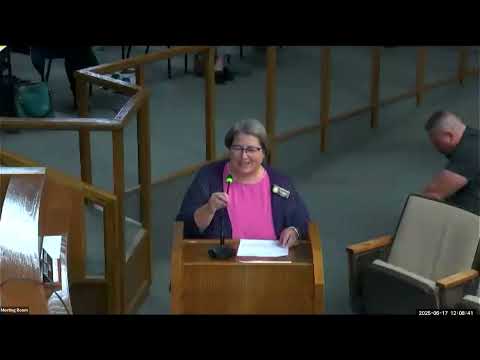
Preservation advocates urged limits on any sale. Milward Simpson, chair of the Cheyenne Historic Preservation Board, said the board unanimously recommended either keeping the structure off the surplus list or, if it is surplused, adding deed conditions that prohibit demolition, preserve the building’s exterior eligibility for the National Register of Historic Places, and require renovations that meet the U.S. Department of the Interior’s standards. Simpson and other speakers noted the potential for state historic preservation tax credits that can offset up to 20% of rehabilitation costs for eligible projects.
Local architect Randy Byers and representatives from Historic Cheyenne Inc. echoed the preservation recommendations and urged the committee to consider options beyond outright sale, including long‑term leases or syndication arrangements that would allow tax credits to benefit a lessee or nonprofit developer. Byers cautioned the city may not be able to use the tax credits directly because tax credits require a taxpayer to claim them, but he said private buyers or lessees could access the credits and that syndication could pass credits to investors.
City attorney John Brody told the committee the governing body may set sale terms and conditions under the statute and that the resolution could be amended to contemplate leases or other options; his office offered to draft substitute language if the committee asked.
Committee members spoke to balancing historic preservation with fiscal constraints. One member said listing the property for sale would create a public conversation and leave room for lease or 6P (sixth‑penny) funding discussions if no acceptable buyers emerge. Another member urged a planning study of surrounding infrastructure and access — including greenway, arterial traffic, and adjacent wetlands — before long‑term disposition decisions.
A motion to adopt the resolution was made and seconded. Recorded speakers on the motion included Council members Moody and Escobel voting in favor and a recorded no vote from Roy Ball; Councilwoman Layla stated she would vote no and the committee chair did not cast a vote. Following the vote the committee moved to the next agenda item for consideration at the full council meeting.
Why it matters: the pump house is tied to downtown greenway, stormwater features and West Edge redevelopment plans, and the committee’s direction sets the process by which the city will test public interest while preservationists seek legally binding deed conditions.
The city attorney’s office and sponsoring council members indicated they will consider draft amendments before the full council meeting that could add leasing or preservation conditions and the attorney’s office offered to prepare substitute language for council consideration.