Get Full Government Meeting Transcripts, Videos, & Alerts Forever!
Get email alerts on the Parks Accessibility Mobility Devices topic
No spam. Unsubscribe anytime.
Council Adopts Policy Allowing Power‑Driven Mobility Devices on City Trails with 5 mph Limit
Summary
The Common Council approved a Parks and Recreation policy permitting power‑driven mobility devices on city trails and set a 5 mph speed limit; councilors debated whether the limit should be higher on flat trails.
The Common Council approved a Parks and Recreation Division policy and permit allowing power‑driven mobility devices on city trails, including a 5 mph speed limit in permitted areas.
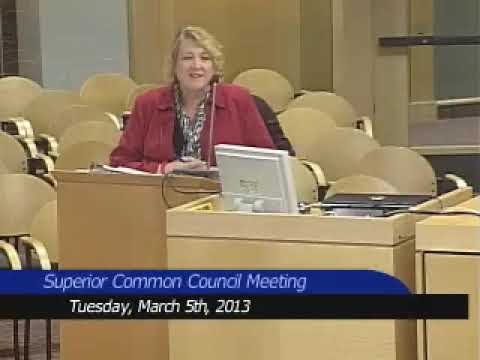
Councilor Brown asked whether the policy applied to trails and raised safety concerns about the 5 mph limit, saying it was hard to hear details and asking if the rule covered mobility on the trails. “I just I think that 5 mile an hour speed limit is pretty slow,” Brown said, adding that state trail practice sometimes uses a 10 mph limit for motorized devices when pedestrians are present.
Councilor Bridal, who said the item had spent substantial time in committee, urged passage without returning it to committee, calling it “a step in the right direction” and noting federal regulations had already taken effect. Parks and Recreation Administrator Morgan and staff member Mary described outreach to disability advocates and research on other communities’ policies; Morgan said she reviewed approximately a dozen other communities and that the park commission favored the 5 mph limit. Morgan also noted the state statute for snowmobiles includes a 10 mph slow‑down requirement on encountering pedestrians as a possible comparison point.
Councilors debated terrain considerations: one councilor noted steep sections of some trails where a 5 mph limit was appropriate, while Councilor Stenberg said he was aware of one chair that could reach 6 mph. After discussion, the council approved the policy by voice vote.
Why it matters: The policy implements federal guidance and local park commission recommendations while raising practical questions about speed limits and trail safety for pedestrians, cyclists and users of mobility devices.