Get Full Government Meeting Transcripts, Videos, & Alerts Forever!
Get email alerts on the Animal Shelter topic
No spam. Unsubscribe anytime.
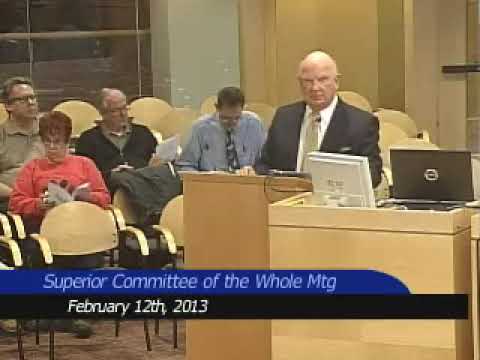
Superior council holds countywide animal-shelter proposal in committee after funding questions
Summary
The Committee of the Whole reviewed city staff cost estimates for a proposed county-serving animal shelter and voted to hold the item in committee while seeking more information on siting, construction costs and county participation.
The Superior Committee of the Whole voted Tuesday to hold a recommendation on a proposed county-serving animal shelter while staff and councilors seek more information on siting, construction costs and potential county and township participation.
Mayor Bruce Hagan and city staff presented capital and operating estimates for a smaller (6,300-square-foot) and a larger (9,600-square-foot) shelter. City staff said the smaller building’s estimated capital cost is just under $2.3 million and the larger is roughly $3.1 million, leaving a one-time capital gap of about $828,000 to move from a city-only shelter to a facility intended to serve the county. Staff also identified an annual operating shortfall in the model presented: roughly $59,000 a year for the larger shelter in the example shown to the council.
The numbers matter because the city is seeking a single facility to serve Superior and surrounding towns. “I would recommend that we take a very hard look at the gap, get our heads together with the folks here, and figure out a methodology to try to achieve that without further taxing the taxpayers of Superior,” Mayor Hagan said during the discussion.
Council and speakers focused on three practical issues: the accuracy of the construction estimates, who will pay ongoing operating costs, and whether towns and Douglas County will contribute. Dan Corbin, chairman of the Douglas County administration committee, told the council he supports a single county facility in principle but asked for clarity on the per-square-foot cost. “Doesn’t that $325 a square foot alarm anybody?” Corbin asked, noting other recent local municipal projects with much lower reported per-square-foot costs.
Bob McKellar, owner of Superior Animal Hospital and Boarding Suites and an advisory-committee member on the shelter project, urged caution about reducing the facility size to save money. “A smaller shelter is not gonna do it. This is a smaller shelter is not gonna have the community support,” McKellar said, arguing that operations and fundraising capacity influence whether a facility will function as intended.
Representatives of the Humane Society of Douglas County said they want to be part of a county-serving shelter and that some funds likely could come from the society’s reserves and fundraising. Jean Koski, service secretary of the Humane Society’s board, said the organization would not dissolve its existing operation until it could move into a new facility and offered that the society could contribute to a capital campaign: “We could probably as a shelter right now … contribute $150,000 to that new facility.”
City staff said their estimates were refined since the December meeting by using local utility data and an assessment of component lifespans to calculate ongoing repair-and-maintenance reserves. Staff also noted the city has already issued some debt that factors into multi-year debt-service projections. An assistant finance director helped compile utility assumptions drawn from Superior Water, Light and Power.
County officials and several councilors pushed for more outreach to townships and villages, and for clearer information the county administration committee could use when considering participation. Corbin said Douglas County’s administration committee planned to take the item up in early March; he asked that the county receive clear line-item explanations of what is included in the architect’s estimate before the county committee meets.
Councilors and city staff also discussed revenue options to reduce the operating gap, including increased dog licensing and more aggressive licensing enforcement in townships. Staff said the county’s dog-license receipts are modest and unevenly collected across townships; the Humane Society noted licensing compliance in Douglas County was low (about 9% in the figure cited to the council).
After extended discussion, a councilor moved to hold the item in committee to pursue a possible alternate site, refine cost estimates with the architect and contractor estimates, and coordinate outreach to the towns and Douglas County. The motion was seconded and carried on a voice vote; the council recorded an affirmative “aye” and no recorded negative votes at the meeting.
The committee’s action is procedural: it does not adopt a site, funding plan or intergovernmental agreement. Staff were directed to return with additional detail on cost components, potential intermediate building sizes (the mayor and some councilors discussed an 8,500-square-foot midpoint as a possibility), outreach to the towns and the county’s finance/administration committee, and options to address the recurring operating shortfall.
Next steps discussed on the record included more detailed cost verification with local contractors and architects, a strengthened county outreach plan, and follow-up at the city’s finance and public-works committees. Dan Corbin said the Douglas County administration committee planned discussion on March 7; city staff and proponents indicated they would continue fundraising outreach and pursue licensing initiatives to help operating revenues.
Background: the item was referred to the committee after earlier council consideration and followed project work dating back several years. The council’s staff presentation and supplemental materials will be posted to the city website, staff said, and were described during the meeting as available to councilors and the public for review before future votes.