Get Full Government Meeting Transcripts, Videos, & Alerts Forever!
Get email alerts on the Wetlands Buffer Violation topic
No spam. Unsubscribe anytime.
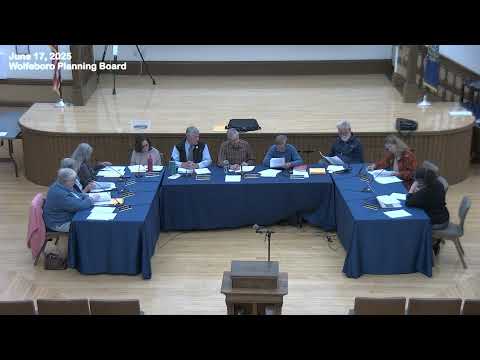
Wolfeboro planning board hears preliminary consultation on after‑the‑fact fill in wetland buffer at 9 Christopher Court
Summary
The Wolfeboro Planning Board held a preliminary consultation on June 17 over an after‑the‑fact special‑use permit request for fill placed inside a wetland buffer at 9 Christopher Court.
The Wolfeboro Planning Board held a preliminary consultation on June 17 over an after‑the‑fact special‑use permit request for fill placed inside a wetland buffer at 9 Christopher Court.
The discussion centered on how the applicant should proceed after town staff discovered fill placed “right to the edge of [the] wetland,” the board said, and on the procedural steps required for either restoring the site or seeking retroactive approval. The board did not take a final vote on an after‑the‑fact permit at the meeting.
Why this matters: The town’s Wetlands Conservation Overlay District sets a 25‑foot buffer intended to protect wetland functions including on‑site water dissipation and downstream water quality. Board members and staff said unauthorized fill in that buffer can destabilize slopes and cause sediment or runoff to reach the wetland and neighboring properties.
At the meeting, applicant representatives described the site work and asked the board for guidance on next steps. Peter Cooperdock of Furnstone Associates said he had been “told to come here and try to decide a path forward for this.” Owner Sean Dunn acknowledged the fill and said he had been advised by a previous building inspector during construction to bring the patio/pervious area to the board. He told the board he has a stop‑work order in place and that a planned closing on the house was delayed. Dunn said he offered a bond as part of a temporary occupancy proposal, noting he initially offered $10,000 and later said he would post $20,000.
Board members emphasized both procedural and environmental points. Roger Murray outlined the ordinance’s purpose, saying the regulations are intended “to allow the water to dissipate before it gets into the wetland” and warned that building up the buffer can send water straight to the wetland and onto neighbors. Several members urged the applicant to stabilize exposed soil immediately to reduce erosion risks before the board can hold a fully noticed hearing.
Legal and procedural steps discussed included: (1) the option on the enforcement letter to remove the fill and restore pre‑existing grades and reseed with conservation mix, subject to inspection; (2) the ability to file an after‑the‑fact special‑use permit that would require abutter notification and a 30‑day application period; and (3) the applicant’s right to appeal administrative enforcement decisions to the Zoning Board of Adjustment (ZBA). The town’s planning staff noted an enforcement letter required corrective action by July 1.
Board members and staff recommended several immediate steps for the applicant: work with the building inspector to agree on any temporary erosion control measures, coordinate with the town manager and town counsel where the enforcement letter indicates to do so, have a certified wetland scientist delineate the wetland and produce current as‑built topography, and seek input from the Conservation Commission on a restoration or mitigation plan. The board repeatedly said that any supplemental application that materially changes what abutters would need to review must be re‑noticed so abutters have the opportunity to comment.
The board also reviewed outcomes from the prior hearing on the same parcel: members said the board previously addressed the stairs and a pervious patio but had not formally addressed the fill. At the prior meeting the transcript records a split vote sequence (noted in meeting discussion as a 3‑3‑1 split) that left the fill issue unresolved and the stairs/pervious patio issue partially addressed. The board clarified at this meeting that the earlier consideration of stairs/pervious patio did not constitute approval of the fill itself.
What the board directed: While no formal planning‑board approval was issued for the after‑the‑fact permit, the board advised the applicant to (a) stabilize the disturbed area now with appropriate erosion control (silt fencing, mulch/hay or equivalent) if the building inspector concurs; (b) obtain a current wetland delineation and as‑built elevations; (c) coordinate any corrective plan with the town manager, building inspector, and town counsel; and (d) solicit Conservation Commission review before filing a new or supplemental application that would be subject to abutter notification.
The applicant asked whether removing the fill now would expose him to enforcement; the planning chair said he would be surprised if a property owner following the enforcement letter’s corrective steps were held in violation, but the board also advised Dunn to work directly with the building inspector for a clear administrative path. The meeting record also notes that the town manager signed the enforcement letter and that the letter references appeals to the ZBA.
Next steps: The board said an after‑the‑fact application (or a restoration plan) must be fully noticed and would appear on a future agenda after required notices. The board repeatedly recommended Conservation Commission input as part of any subsequent submission. The applicant indicated he would prepare a plan showing existing conditions and proposed stabilizing/vegetative measures for a future hearing, and staff advised that abutter notification timelines will govern when the board can consider those materials.
Ending: The board closed the preliminary consultation without a final vote and left the matter open for the applicant to either restore the site under the enforcement letter or pursue appeal and/or an after‑the‑fact permit with required notices and scientific documentation.