Get Full Government Meeting Transcripts, Videos, & Alerts Forever!
Get email alerts on the Community Reinvestment Area topic
No spam. Unsubscribe anytime.
Findlay committee approves drafting to amend pre‑1994 CRA, add sunset and craft post‑1994 policy
Summary
The Findlay Strategic Planning Committee voted to direct the administration and city attorney to draft legislation amending CRA 1 to current city limits, add sunset language, and prepare a new post‑1994 Community Reinvestment Area policy after an attorney briefing on tradeoffs between pre‑1994 and post‑1994 CRAs.
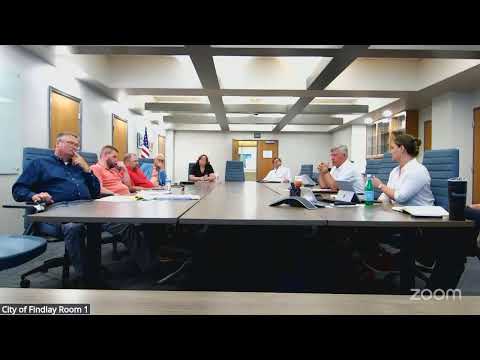
Findlay City’s Strategic Planning Committee voted June 17 to direct the administration and the city attorney to draft legislation updating the city’s existing Community Reinvestment Area (CRA) rules: amend CRA No. 1 to reflect current city boundaries, add a sunset provision, and prepare a new post‑1994 CRA policy for future use.
The action followed a presentation from Attorney Sean Burn, who briefed the committee on legal differences between “pre‑94” and “post‑94” CRAs and options for sunsetting the older designation. Burn said, “the city currently has 2 CRAs. They're both pre 94 CRAs,” and explained the practical tradeoffs: “The benefit of a pre 94 CRA is it's a 100% abatement. You don't need to do agreements, and there's, there's, there's no other ancillary approvals.”
Why it matters: pre‑1994 CRAs can grant automatic, as‑of‑right tax abatements that limit the city’s ability to set project‑level conditions. Burn said a post‑1994 CRA requires written agreements before construction and therefore gives the city “a lot more flexibility to incentivize projects they want and non incentivize projects they don't want.” Committee members said they wanted a transition that protects projects already underway while preventing new, automatic abatements after a set date.
Key points from the discussion included limits on amendments, geographic scope, timing and enforcement. Burn advised that a pre‑1994 CRA may be amended only twice and noted CRA No. 1 has already been amended once; CRA No. 2 was being left unchanged. He recommended amending CRA No. 1 to include all territory annexed to date so future projects cannot dispute the area. He also proposed sunsetting by tying eligibility to construction milestones — for example, requiring that vertical construction begin by a specified date and complete within a further time window to prevent projects from “gaming the system.”
City Auditor Jim Stasiak asked whether a developer could choose the pre‑1994 option if pre‑ and post‑94 CRAs overlapped; Burn confirmed that overlap creates that risk and is a reason municipalities avoid concurrent coverage. Burn described other controls available under post‑1994 agreements: minimum investment levels, job‑creation or wage commitments and clawback clauses for enforcement. “You can do whatever fits the project,” he said, adding that such terms are typically negotiated on a project‑by‑project basis.
The committee also discussed school‑district impacts and state statute. Burn cited the state statutory provision that triggers income‑tax sharing when a CRA abatement without school‑district consent results in more than $2,000,000 of income tax generated; he identified the relevant statutory reference as 5709.82 and summarized how the law allows allocation of up to 35% to infrastructure before applying a sharing ratio and that sharing often is negotiated with the district rather than imposed automatically.
Operational steps and next actions recorded in the meeting: the committee approved a motion directing the administration to work with Attorney Sean Burn and city staff to draft (1) an amendment to CRA No. 1 to align its boundary with current city limits and include sunset language and (2) legal documents to establish a new post‑1994 CRA framework. The motion was made by the administration (as described by the mayor) and seconded; the committee took a voice vote and the motion passed. Meeting participants noted the city will need to perform a housing survey to support a new post‑1994 petition and that future annexations will require amendment of any post‑1994 CRA petition and a notice to ODOD, including publication in a newspaper of general circulation for two consecutive weeks.
Committee members raised follow‑up concerns staff should address in drafting. One member requested the city consider commissioning a different firm for the housing study, citing errors in a previous study. Another asked staff to consider wage targets and enforcement language in agreements so projects produce jobs with local value. Burn cautioned that remedies for breached agreements can include termination of benefits or clawback litigation in cases of serious contract breach.
The committee’s direction does not itself change tax abatements; it authorizes staff and the city attorney to prepare ordinances and petition language for future council consideration. The administration and Attorney Burn will return with draft legislation and details on proposed sunset language, timelines for construction eligibility, required housing study work and options for negotiating school‑district sharing.