Get Full Government Meeting Transcripts, Videos, & Alerts Forever!
Get email alerts on the Telecommunications Tower topic
No spam. Unsubscribe anytime.
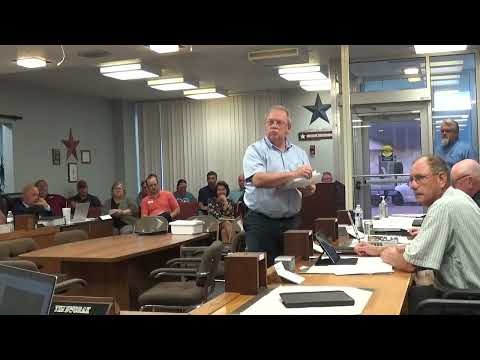
City Council denies T‑Mobile tower after residents raise safety, aesthetics and property‑value concerns
Summary
After hours of public comment and a unanimous vote, the Seward City Council denied a T‑Mobile proposal to build a roughly 250‑foot telecommunications tower near a residential neighborhood, citing resident opposition and unanswered technical questions about fall radius and site selection.
The Seward City Council voted 7‑0 to deny an application by a T‑Mobile representative to build a telecommunications tower near a residential area after multiple residents urged the council to reject the proposal.
Residents told the council they feared the tower’s size and appearance, potential effects on property values and long‑term health risks. Katie Pellster, president of the Ridge Run Homeowners Association, said, “The Ridge Run Homeowners Association is opposed to the construction of this tower.” Aruba Lamba, a nearby resident, told the council: “If any of you lived right next to that where that tower is being put up, would you want your kids or your grandkids, you know, living around that tower?”
The council’s liaisons to the Planning and Zoning Commission said they had attended that commission’s hearing and described a detailed review there. “I learned a great deal. I think the Planning and Zoning Commission did a very thorough job of asking questions about the concerns expressed by the citizens who live in the area,” one council liaison said, and added that the T‑Mobile representative “did a very nice job of explaining exactly what his role was which is the determination of a site to put a tower.” The planning commission vote had opposed the application 6‑0.
Council discussion focused on several technical and process questions raised at the Planning and Zoning Commission: the fall radius of the tower, whether other existing towers could be used, and how the company had solicited nearby landowners. One councilmember noted that the planning commission had asked about “the process used for selection.” Another councilmember said the commission and the public had not been fully convinced by the civil engineer’s calculations, noting that the engineer who produced the fall‑radius calculations was a civil engineer and not a structural engineer.
The Federal Communications Commission was cited in the public discussion as the federal regulator that governs certain aspects of wireless siting and health claims; Planning and Zoning leadership said there is not “solid evidence of health risks at this time,” a point relayed from that commission’s hearing. Several speakers urged the council to consider the city’s expected eastward growth when weighing placement of a 250‑foot structure near land that could later be within city limits.
After public comment and brief council discussion about whether tabling for more information would be appropriate, Councilmember motioned to deny the application. The council’s vote was unanimous, 7‑0, to deny the T‑Mobile tower application.
The council did not adopt new siting rules or technical standards at the meeting; the action was a denial of this specific application.