Get Full Government Meeting Transcripts, Videos, & Alerts Forever!
Get email alerts on the Board Governance Violations topic
No spam. Unsubscribe anytime.
Board splits over policy to handle alleged violations by school board members; fate of enforcement procedure unclear
Summary
Directors debated whether to keep or sunset policy 203.7 (procedures for alleged board-member violations). Some urged retaining a written process; others said existing statutes and policy 2-11 suffice.
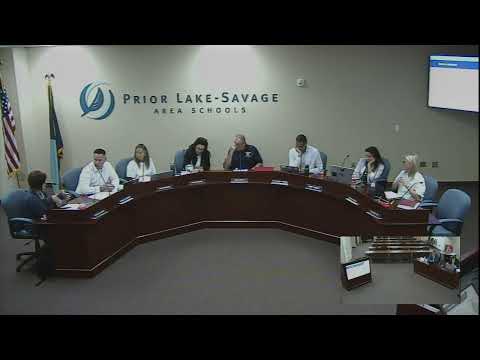
The Prior Lake-Savage Area Schools Board of Directors spent extended time debating policy 203.7, a district procedure that outlines steps for addressing alleged violations by board members, including progressive steps and possible censure.
Director Bullion and others argued the district should retain a formal procedure to ensure consistent future responses to board conduct issues. Bullion said MSBA had advised that when districts lack a policy they will be “on your own” if a governance dispute arises, and added, “Without that you can end up — and again we're supposed to lead by example here.”
Opponents said the policy’s language risks exceeding legal limits, pointing to recent court cases where attempts to censor elected board members were overturned. Director France argued some provisions were illegal and overly subjective, citing that “censoring a board member” could invite litigation; France favored relying on policy 2-11 (civil/criminal action) and the district’s code of ethics instead of a separate enforcement procedure.
Several directors proposed moving any non-statutory steps into a board handbook or operating norms rather than a formal policy. Others stressed that without written procedures future boards could lack tools to respond consistently to misconduct and that policies should exist to provide predictable governance over time.
The study-session did not produce a formal vote. Directors indicated differing preferences: some favored retaining 203.7 as a policy, others favored sunsetting it and transferring procedural elements to the handbook. Chair White noted she would take steps to clarify the legal and procedural issues and return with recommendations; no formal action was taken.
Directors also discussed MSBA guidance and case law; several urged caution because Minnesota statute and case outcomes can be “vacuous at best” on board discipline. The board’s policy 2-11 (civil or criminal action) and policy 209 (ethics) were repeatedly referenced as related mechanisms.
Outcome: No vote. Chair White committed to further review and to bring recommendations about whether 203.7 should remain as a policy or be moved to the board handbook.