Get Full Government Meeting Transcripts, Videos, & Alerts Forever!
Get email alerts on the Land Use Replatting topic
No spam. Unsubscribe anytime.
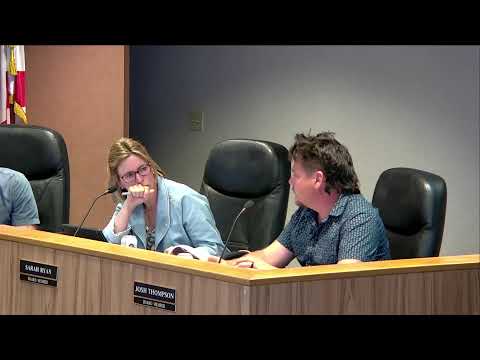
Commission recommends denial of Seafoam Way replat amid tether, lot-size and ISR concerns
Summary
The Planning and Zoning Commission voted 3–2 to recommend denial of a major replat for two parcels on Seafoam Way after extended discussion about 1-foot tethers that combine dune land with buildable lots to meet the 7,500-square-foot minimum for low-density zoning.
The Planning and Zoning Commission on June 17 recommended denial of a major replat for two parcels on Seafoam Way, citing concerns that small "tether" connections to dune parcels would undermine the intent of the city's 7,500-square-foot minimum lot size for low-density residential zoning.
Staff described the proposal as a major replat to split two parcels (identified in materials as Parcel 1A and Parcel 1C) on the north side of Seafoam Way. Jennifer Thompson, planning staff, said each interior parcel measured roughly 6,200 and 6,800 square feet respectively but that 1-foot tethers to adjacent coastal parcels would add sufficient square footage to reach the 7,500-square-foot threshold in the code.
Brian Law, the city attorney, told the board that "single family lots shall have a minimum area of 7,500 square feet," and said the board's role was to weigh whether the replat met both the letter and intent of the code. Law also described limits on variances when a comprehensive-plan standard applies and noted DEP and coastal construction control line issues relevant to the seaward parcels.
Applicant and board member Eric Kenny said the tethering had historical precedent in the neighborhood and that his intent was to preserve the dune parcels from future development: "That was the original intent of taking the tether over from the West Side lots," he said, describing earlier approvals and his tax records showing two parcel IDs. Kenny said he could accept conditions restricting ISR if the board preferred.
Resident Kevin Reed, who lives in the immediate area, urged the board to reject the replat, calling the tether arrangement a "ridiculous manipulation of the parcel" that could set a precedent for artificially meeting area requirements by attaching narrow strips of dune land to buildable lots. Reed and other residents argued the arrangement could increase impervious coverage and drainage concerns if interpreted as adding buildable area for ISR calculations.
Commission discussion focused on three points: whether the signed, sealed surveyor's plat (which shows ownership to mean high tide) should control over property-appraiser records; whether the one-foot tethers subverted the intent of minimum lot-area requirements; and whether any recommendation could or should include deed restrictions or ISR limits (staff and the city attorney advised the board that deed restrictions or conditions limiting private transfers are outside the board's authority and that the commission could consider recommendations but was not required to adopt them).
After debate the commission voted to recommend denial of the replat to the City Commission, 3–2. The recommendation will be included in the record for the City Commission's consideration; the replat application will next appear before the City Commission where the commission may accept, modify or reject the planning board's recommendation.