
Asheville councilors debate short-term measures to boost downtown recovery after storm
Get AI-powered insights, summaries, and transcripts
Subscribe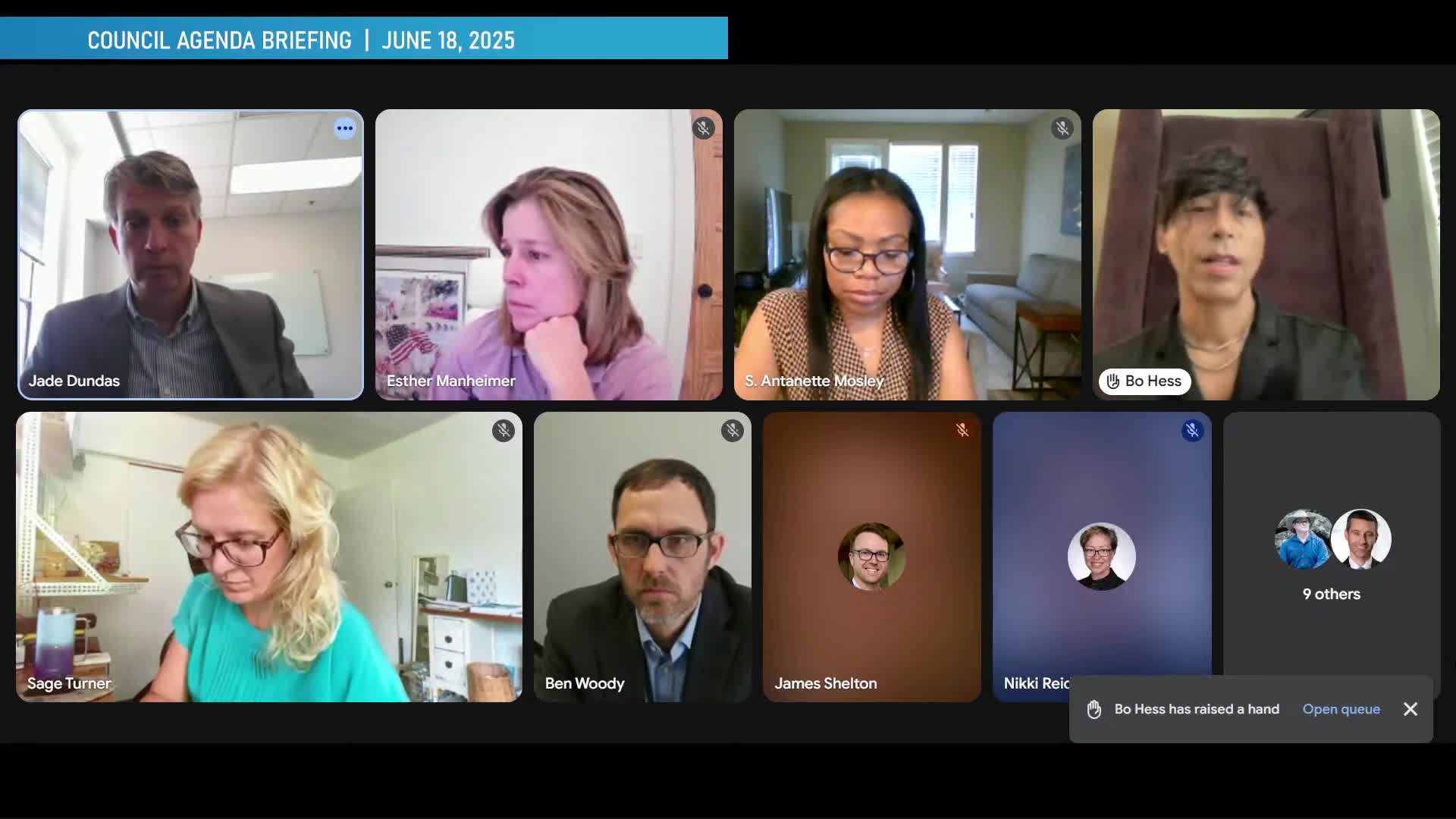
Summary
Council members discussed temporary regulatory changes and event-based strategies — including social-district-style event zones, temporary noise allowances and food truck/push-cart expansions — but did not direct staff to change ordinances. Members urged community partners to propose pilot plans for committee review.
Council members and staff on June 18 discussed a package of possible, short-term actions to support downtown businesses and cultural venues still recovering after the recent storm, but stopped short of directing ordinance changes.
The discussion centered on several ideas: temporarily increasing the number of special-permit events that can exceed the city—s decibel limits, piloting event-based social districts (allowing businesses to sell alcohol within a closed-block event footprint instead of a single festival operator), and loosening rules for push carts and food trucks to increase activation and foot traffic.
Why it matters: Council members said downtown activation could help small businesses and workers still feeling the economic impact of the storm. Council member Beau Hess urged quick, practical measures, saying, "we are missing some opportunities to really be responsive and move in an expedited fashion for our folks." Council member Sage Turner added that the city should weigh cost-effectiveness when deciding which recovery investments to make.
What councilors discussed: Council members repeatedly distinguished between permanent code rewrites and temporary event pilots. Several members, including Mayor Esther Mannheimer, noted the original noise ordinance process was lengthy and community-intensive and cautioned that changing the ordinance again would require staff time and public outreach. Mannheimer said the original process addressed a large volume of complaints, noting, "we were getting 2,000 complaints a year about noise." She said any changes would need community input.
Supporters of quicker action asked whether the city could adopt limited, time-bound measures similar to the temporary street closures and outdoor dining programs used during the COVID pandemic. Council member Kim Roney proposed event-focused social districts that would operate only during street closures or similar permitted events, explaining how such an approach could let businesses sell alcohol during an event rather than having a single event operator manage alcohol sales.
Concerns and constraints: Multiple council members and staff warned that even limited changes would consume staff time and require coordination with multiple departments. Assistant City Manager Ben Woody and other staff flagged the distinction between indoor and outdoor venues: the noise ordinance—s special-permit allowance applies more strictly to outdoor venues. Mannheimer said any proposal to increase the current cap on special permits should include public outreach; she also said she did not personally favor raising the annual cap from 30 to 50 without further review.
Next steps: Council members asked the Downtown Association and other community partners to compile concrete pilot proposals and data. Mannheimer and other councilors suggested those proposals could be routed to the Planning, Economic Development & Engagement (PEDE) committee for evaluation and staff feasibility review before any ordinance change is scheduled. Several council members said they would meet with community partners to shape recommendations for PEDE.
Taper: No formal action was taken at the briefing; councilors encouraged community-led pilot proposals and signaled that staff and the PEDE committee would be the next step for vetting any specific short-term recovery measures.