
Public health advocates press Buffalo committee to ban menthol; legal counsel says city may need state enabling law
Get AI-powered insights, summaries, and transcripts
Subscribe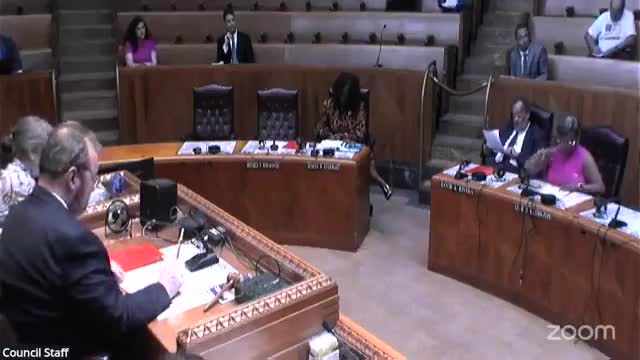
Summary
At the Committee on Community Development meeting June 17, public health advocates and community leaders urged the Common Council to ban menthol-flavored tobacco. City legal staff said the city may need state enabling legislation; committee members asked for a formal legal opinion and ultimately tabled the item for further review.
At its June 17 meeting, the Committee on Community Development of the Buffalo Common Council heard more than an hour of public testimony urging the city to ban menthol-flavored tobacco products and other flavored tobacco, especially where youth and marginalized communities live.
The testimony emphasized disproportionate harms in Black, Brown and LGBTQI+ neighborhoods and cited local research. Melissa Sanchez, assistant corporation counsel, told the committee, "My understanding is that we would need state enabling legislation first in order for the city to actually ban menthol." Committee members then asked the law department for a formal written opinion. The committee later voted to table the item pending that guidance.
Why it matters: Public speakers from local health and civil-rights groups said menthol products are a major factor in nicotine initiation among young people and in persistent disparities in tobacco-related disease. Advocates told the committee the proposed restriction would align Buffalo with other jurisdictions and could save lives, while legal staff warned the council to confirm whether the city has authority to adopt a local ban.
Public testimony
Pastor George Nicholas, identifying himself as CEO of the Buffalo Center for Health Equity and chair of the African American Health Equity Task Force, said Big Tobacco targets Black and Brown communities and described menthol as "a very sinister" public-health problem. "Big Tobacco targets these communities, because they know that the proper use of this product, the end result is death," he said.
Kara Herbitz of the National LGBTQI+ Cancer Network said menthol and other flavored products are frequently the first product used by LGBTQI+ adolescents and young adults and cited the Williams Institute estimate provided in testimony that 4.1 percent of Buffalo's population identifies as LGBTQI+ ("about 37,000 people"). Herbitz said flavored products are linked to initiation and higher use among LGBTQI+ youth.
Reverend Blue, president of the Buffalo NAACP, called menthol a civil-rights as well as a public-health issue and urged the committee to "put an end to this" in city law. Stan Martin, a resident and public-health advocate, said he had provided Roswell Park Comprehensive Cancer Center research to committee members and said that research projects "over 700 lives would be saved by banning menthol tobacco." He also referenced local disparities in retailer density.
Council discussion and legal questions
Multiple council members expressed support for the policy goals but asked the law department to clarify the city's legal authority. Melissa Sanchez, assistant corporation counsel, said the legal department's understanding was that state enabling legislation would be required for a city ban. One council member urged colleagues to "get with our state legislators" and pursue a statewide solution in parallel with local steps; another, Council Member Rivera, said, "If the city can ban menthol, then I would be supportive... I'm not gonna wait for the state." Council Member Wyatt urged colleagues to "let it go to court" if necessary and to send a clear message in favor of action.
Formal action
The committee removed the menthol item (agenda item 26) from the table to allow public comment and discussion. After public testimony and council discussion the committee voted to table the item pending a legal opinion from the corporation counsel and further clarification about whether state enabling legislation is required. The transcript records the motion to table and that it was seconded; no roll-call vote tally is recorded in the transcript.
Context and background
Speakers repeatedly cited Roswell Park Comprehensive Cancer Center research and longstanding public-health outreach by local groups. Advocates also noted recent municipal and state debates elsewhere about menthol and flavored-tobacco restrictions. Several speakers described outreach and voluntary retailer agreements in parts of the city, and youth speakers described flavored products as a gateway to nicotine addiction.
What comes next
Committee members asked the law department for a formal written opinion on the city's authority to adopt a menthol ban and encouraged parallel outreach to Western New York state legislators to seek enabling legislation. The committee tabled the item until that legal guidance and any additional state coordination can be reported back.
Ending: The committee concluded by tabling the menthol item for further review; proponents said they will continue advocacy and outreach to state legislators while awaiting the law department's written opinion.