
Committee discusses property-tax "circuit breaker" resolution to protect long‑term low‑income homeowners
Get AI-powered insights, summaries, and transcripts
Subscribe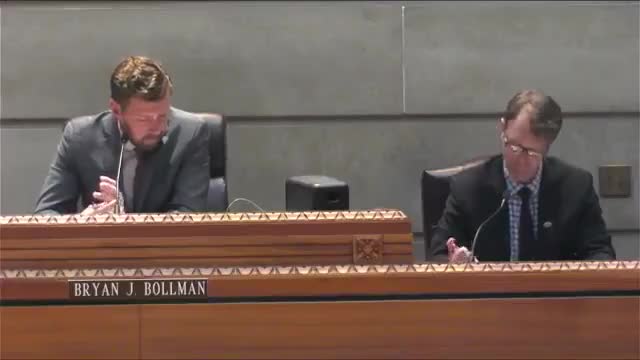
Summary
A council member introduced a resolution directing city staff to explore a property-tax circuit breaker to cap tax burdens for long‑term and low‑income homeowners; council members supported the aim but raised funding and equity questions and asked to work with administration and the state to model fiscal impacts.
A council member introduced a resolution to the Buffalo City Committee on Finance on Tuesday, June 2025, asking the city to explore a local property-tax "circuit breaker" to protect low-income and generational homeowners from displacement caused by rising property-tax burdens.
"The purpose of this resolution is to protect low income and generational homeowners, in the city of Buffalo from displacement," the sponsor said, explaining the proposed program would cap property taxes as a percentage of household income and that criteria—such as residency, length of ownership, income threshold and assessed-value limits—would need to be developed with the administration and state partners.
The sponsor offered an illustrative example to explain how a circuit breaker could work: if a household with $30,000 in income had a $2,400 tax bill, and the program set a 5%-of-income threshold ($1,500), the homeowner would receive a rebate or forgiveness for the $900 that exceeded the cap. The sponsor emphasized the program would be citywide and intended to protect long-term owners across neighborhoods.
Council members supported the goal but repeatedly raised the core fiscal question: who pays for the relief, and how will it affect other taxpayers and the city’s finances? "My only concern is the funding, to pay for it and who pays the bridal," Council member Rivera said, asking that modeling show whether other taxpayers would shoulder increased costs. Other council members noted prior experience with revaluation, where some neighborhoods saw tax burdens rise while others fell, and said any local program should be modeled for distributional impacts and municipal sustainability.
The sponsor and colleagues said the idea likely would require state law changes to permit targeted local authority and that the resolution is an initial step to work with city administration, finance and state legislative partners to develop a model. Committee members moved to table the item to allow additional analysis and interdepartmental work before a formal vote.
Why it matters: a local circuit breaker could keep long-term, low-income owners from losing homes due to rising tax bills, but it would shift fiscal obligations and require careful modeling to avoid unintended consequences for city finances or other taxpayers.