Get Full Government Meeting Transcripts, Videos, & Alerts Forever!
Get email alerts on the City Budget topic
No spam. Unsubscribe anytime.
Common Council approves 2025–26 budget as amended after dispute over overtime and reserves
Summary
The Buffalo Common Council approved the mayor’s 2025–26 operating budget as amended after hours of debate over police and fire overtime, the city’s depleted reserves and a short-term gap plan. The measure passed 6–2; council members called for audits, reserve deposits and an MOU on a property tax circuit breaker.
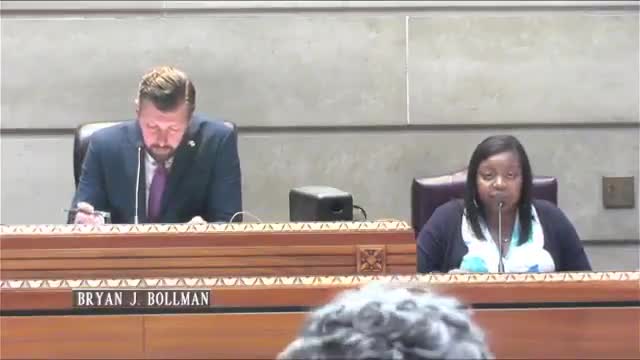
The Buffalo Common Council voted to approve the city’s 2025–26 operating budget as amended on May 27, 2025, after several hours of debate focused on police and fire overtime, rebuilding the city’s reserve fund and the mayor’s gap-closing plan. The measure passed 6–2.
The vote followed a series of late-filed amendments that leaders said would hold roughly $1 million in savings for the general fund, require reimbursement of public-safety costs at large events, and create a memorandum of understanding to pursue a property tax circuit breaker for low-income homeowners. Council members also requested additional documentation on the mayor’s gap plan, which the council was told includes a proposed $30 million short-term deficit note if projected revenues do not materialize.
Councilmember Wyatt framed his objections around public-safety overtime, which he described as “unsustainable,” and proposed large reductions to police, civilian and fire overtime accounts. Councilmember Wyatt said he would vote against the budget, adding, “I will be voting no again on this budget because it’s getting the same tricks that we’ve done in the past that hasn’t worked.” Councilmember White urged more aggressive cuts and said the current approach “put[s] additional burden on the taxpayer.”
Administration officials provided overtime detail during the meeting. Raymore Nasworthy, Commissioner of Administration and Finance, said the police department’s contractual overtime category totaled about $3,000,000 year to date and that fire’s overtime tied to minimum staffing requirements totaled about $8,700,000. Nasworthy described the $3,000,000 figure for police as “the contractual overtime amount, that $3,000,000.” Council members asked for an independent audit of overtime spending and more granular payroll documentation.
Other amendments accepted by the council included language to deposit certain savings into the city’s reserve fund, to require reimbursement for large-scale event public-safety costs, and to support restoration of funding for frontline arts organizations. The council also approved an MOU with the administration that commits to continued work on a property tax circuit breaker, while noting that any change to the tax levy would require enabling legislation from the New York State Legislature.
Council members described the city’s fiscal picture as structurally challenged. Multiple members cited a roughly $70,000,000 budget gap this year and warned that out-year deficits could be larger unless structural changes are made. One council member said the city once held about $100,000,000 in reserves and that current reserves were “absolutely nothing,” while others urged vacancy control and consolidation of duplicate positions to reduce long-term costs.
The final roll call produced a 6–2 result. The council scheduled follow-up committee work: Civil Service on June 3 at 9:45 a.m., Finance immediately following, Legislation at 1 p.m. and Community Development at 2 p.m., where members said they will continue to seek documentation and monitoring of the budget and the gap plan.
The council’s approval as amended does not eliminate the outstanding questions about overtime, gap-closing measures or potential service reductions; members said they expect continued oversight, additional documentation from the administration and possible further action if projected revenues fall short.