Get Full Government Meeting Transcripts, Videos, & Alerts Forever!
Get email alerts on the Property Tax Policy topic
No spam. Unsubscribe anytime.
Council to study property tax “circuit breaker” aimed at protecting low‑income homeowners
Summary
Council members discussed a proposed property tax cap (referred to as a ‘circuit breaker’) intended to protect low‑income and elderly homeowners from tax increases tied to revaluation; members raised questions about who would bear the cost and whether a cap or rebate is preferable.
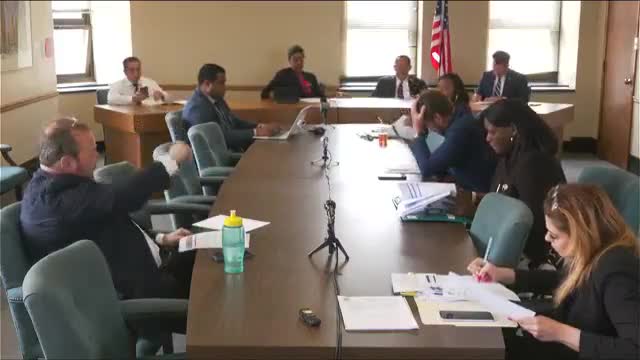
Majority Leader (name not specified) told the Buffalo City Council that item 94 would go to the finance committee to evaluate a property tax cap intended to protect low‑income and generational homeowners from being taxed out of their homes.
“It's to evaluate in a a way to protect those most vulnerable homeowners, from being taxed out of their homes,” Majority Leader said, explaining the proposal would use census data, age and income to target relief. He said the measure would require cooperation with state representatives and was unlikely to pass at the state level during the current session because lawmakers were near the end of the session.
Several council members raised concerns and questions. Council Member Columbic (name not specified) compared the proposal to previous special taxing district conversations and cautioned that protections for some taxpayers could shift greater burdens onto others, asking ‘‘if certain people aren't paying, who is, and will it end up being more moderate income people’’ who pay more. Another member emphasized the administrative design question—whether a cap or a rebate would better serve vulnerable homeowners—and urged consulting real‑property experts and the city’s systems staff to evaluate impacts and payment options.
A council member noted the city has seen more revaluations and said homeowners in some neighborhoods have experienced higher bills. Several members said the proposal warrants further study in the finance committee, which was scheduled to discuss the item the following day.
The discussion in the recorded transcript did not include a formal vote on the policy; the council referred the proposal to the finance committee for further analysis and possible collaboration with state lawmakers.