Get Full Government Meeting Transcripts, Videos, & Alerts Forever!
Get email alerts on the Public Works topic
No spam. Unsubscribe anytime.
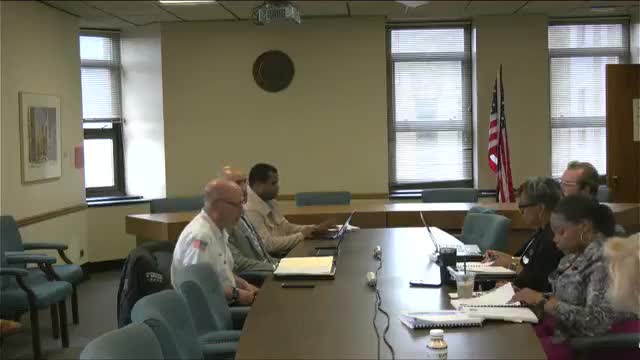
Buffalo officials weigh staffing, overtime and equipment trade-offs as DPW seeks to cut costs
Summary
City officials discussed recruitment challenges for skilled DPW roles, rising overtime tied to bulk trash and daily packer operations, and a push to replace equipment on a steady cycle rather than in spikes to reduce long-term costs.
City officials discussed how long-standing vacancies, recruitment challenges for skilled mechanics and engineers, and the price-versus-capacity of heavy equipment are driving overtime and operating costs for the Department of Public Works (DPW).
At a budget work session, staff said some charter or mandated positions (for example, a deputy commissioner in fire) cannot be removed from the budget but may be left unfilled to realize attrition savings. The director’s office described persistent recruitment difficulties for heavy‑duty mechanics, truck drivers and licensed engineers, noting private-sector starting pay can be 30–40% higher than the city’s entry offers. Fleet director James Cross was cited as the person holding comparative pay data for mechanics and other classifications.
Officials said daily garbage collection requires sending packers on shifts even when routes are short of permanent staff. High overtime from those packer operations is built into this year’s numbers: staff estimated five packers on overtime would cost about $1.3 million annually and 10 packers about $2.4 million. Bulk trash collection was shown as another major recurring cost, roughly $2.1 million a year in labor and disposal; staff broke that into about $1.4 million in labor and roughly $700,000 for disposal fees.
DPW told the council it negotiated six new packers in the capital plan (original request was 10) and expects those to arrive over a multi‑year replacement schedule rather than as a single capital spike. That steady-replacement approach is intended to reduce the overtime burden over time while balancing capital constraints.
Council members and staff discussed program design changes to cut bulk‑trash costs — for example, scheduling a single district pickup window rather than two seasonal pickups, charging for secondary collections, or charging institutions such as colleges for special collections. Staff estimated changes could reduce labor costs by roughly a third in an optimistic scenario (about $700,000), but cautioned a one‑year change could create public messaging and enforcement challenges during the transition.
On recruitment, DPW said some positions will be regraded or retitled (for instance, replacing two senior engineer titles with two lower grades) to broaden the candidate pool while retaining needed capacity. Staff also described using contractors for shortfalls in water repairs and other enterprise work where hiring is not feasible; those contractors reduce carrying costs but increase per‑hour rates.
Officials said they will share a document that shows position changes compared to the prior year so council members can see exactly which titles are held vacant, eliminated, or reclassified. That information was requested repeatedly during the session.
Staff noted these operational tradeoffs are central to the city’s effort to “right‑size” services while avoiding sudden large tax increases or unsustainable overtime patterns. Council members emphasized the need for clear public messaging if collection schedules or service levels change.