Get Full Government Meeting Transcripts, Videos, & Alerts Forever!
Get email alerts on the Nuclear Microreactor Infrastructure topic
No spam. Unsubscribe anytime.
Natrona commissioners approve modified letter supporting a Wyoming Business Council grant application for a microreactor campus; residents raise strong safety,税
Summary
Natrona County commissioners approved a modified resolution supporting a Wyoming Business Council grant application of up to $25 million for infrastructure tied to a proposed microreactor campus near Bar Nunn, drawing extensive public opposition over plans for spent-fuel storage.
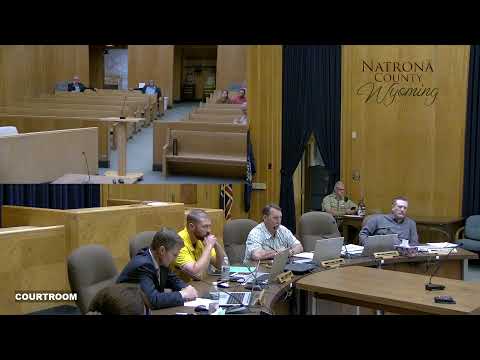
The Natrona County Board of Commissioners approved a consent-agenda resolution to support a grant application to the Wyoming Business Council for up to $25 million to assist infrastructure work for a proposed microreactor campus near Bar Nunn. Commissioners amended the resolution’s final paragraph to say it supports “a grant application in an amount not to exceed $25,000,000” and approved the consent agenda by motion and unanimous voice vote.
Supporters say the funds would pay for infrastructure—roads, security, parking and a public-facing office building—and act as a catalyst for additional economic development. Justin Farley, present for Advance Casper, described the grant as phased infrastructure assistance and said the public-facing “office building would be part of Radiant’s campus and a publicly owned facility,” with a recapture mechanism he said would return some revenue to the community.
The item drew extended public comment and elected-official testimony opposing the campus because of plans for returning and storing spent nuclear fuel on site. Representative Bill Aleman (House District 58) told the commission that under current Wyoming law the company could not accept spent fuel generated elsewhere and said proponents are working to change state statute; he told the board many Bar Nunn residents oppose the project and urged commissioners to block early support. “There is a huge risk,” Aleman said, adding concerns about long-term storage and the limited local tax benefit he attributed to the proposed arrangement.
Multiple Bar Nunn residents and other commenters told the commission they feared transportation of spent fuel, the absence of final storage and shielding plans, and potential long-term health and property consequences. Participants asked the board not to provide a letter of support while statute, licensing, transportation and storage issues remain unresolved.
Commissioners said they would continue to review information as applications are filed and noted the board had not seen a zoning or permitting application. Commissioner Nicholas said he would keep an open mind and promised close scrutiny of any formal application, including zoning or other permits, before the county makes land-use approvals. Commissioner Coates said the work could spur infrastructure that other industries might use, while Commissioner North and others emphasized the legislature controls statutory authority for storage and transportation of radioactive materials.
Action taken: the board approved the consent agenda—including the edited resolution of support—by motion and voice vote. The county clerk’s packet will reflect the approved language and commissioners asked staff to circulate example MOUs and the draft language used in the resolution to interested parties for review.