Get Full Government Meeting Transcripts, Videos, & Alerts Forever!
Get email alerts on the Housing Shelter Policy topic
No spam. Unsubscribe anytime.
Residents and council members press county over proposed 26 Oakley shelter; call for scattered-site sheltering and litigation readiness
Summary
Public commenters at the May 20 meeting criticized county transparency on 26 Oakley Street, urged scattered-site shelters across Dutchess County and praised the council’s stance. Speakers cited recent state housing vouchers and a pending federal policy (REST Act) as part of the housing conversation.
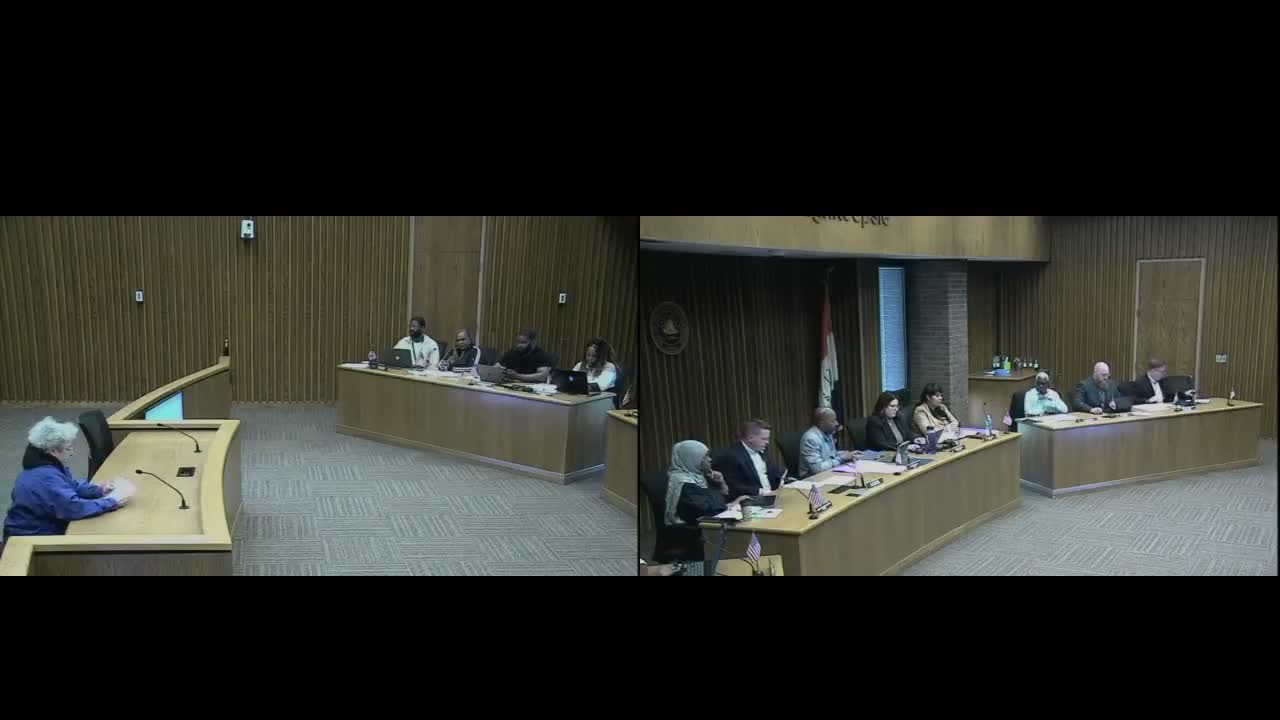
Multiple residents and community organizers used the public participation period at the Poughkeepsie Common Council meeting on May 20 to criticize Dutchess County’s handling of a proposed shelter at 26 Oakley Street and to press the council to pursue scattered-site shelters and legal options.
The discussion is significant because council members and residents described repeated county actions they said concentrate negative impacts in historically Black neighborhoods and urged the city to resist county plans placing large shelter facilities in residential areas.
Laurie Sandow, speaking during public participation, criticized local officials’ transparency and said the municipal administration and appointees had “an equal lack of transparency and accountability,” adding that the city should not be sidelined by county decisions. She told the council she had attempted to speak at a prior meeting and objected to what she called “anonymous closed door meetings of selected quote stakeholders.”
Daniel Latona, a union member and community organizer, described statewide developments in housing policy and urged more countywide shelter options. He said the state-funded Housing Access Voucher Program passed in this year’s state budget “was shrunk … to 50,000,000,” but that “these state funded vouchers will still help thousands of people afford rent if they are homeless or at risk of losing their housing.” Latona added that the vouchers will be available to households making 50% of area median income and that the New York State Homes and Community Renewal agency will administer the program.
Several speakers backed the council’s recent public actions. County Legislator Barrington Atkins told the council, “you have my full support and I got your back,” and urged persistent advocacy before the county. Business owner and longtime resident Doug Nobiletti described the need for “scattered site” supportive housing and “healing centers,” saying he supports services that keep people close to their home communities.
Councilmember Menace discussed the passage of honorary street namings for College Hill during the same meeting and framed those namings in the context of neighborhood preservation. Several councilmembers, including Menace, linked the shelter debate to a pattern of county projects they said disproportionately affect the historically Black North Side.
Speakers urged multiple policy responses: more scattered-site shelters across Dutchess County so people can remain near local supports; expanded state voucher funding in future budgets; and stronger negotiators for the city when dealing with county officials. Daniel Latona said he will continue advocacy in Albany and urged the council to pursue litigation or stronger negotiation where necessary.
No formal council vote addressing the county shelter proposal occurred during the May 20 meeting. Several council members and the public said the matter remains under active negotiation with the county and that further public hearings and legal steps could follow.