Get Full Government Meeting Transcripts, Videos, & Alerts Forever!
Get email alerts on the Hawkers Peddlers topic
No spam. Unsubscribe anytime.
Poughkeepsie council adopts local law easing criminal-conviction limits on hawkers and peddlers
Summary
On Jan. 7 the Poughkeepsie Common Council passed Local Law 25-01 revising Chapter 10 to allow applicants with certain sealed records under the Clean Slate Act to seek hawking and peddling licenses; council members asked the Chamberlain's office for a summer report and the city plans a community education forum.
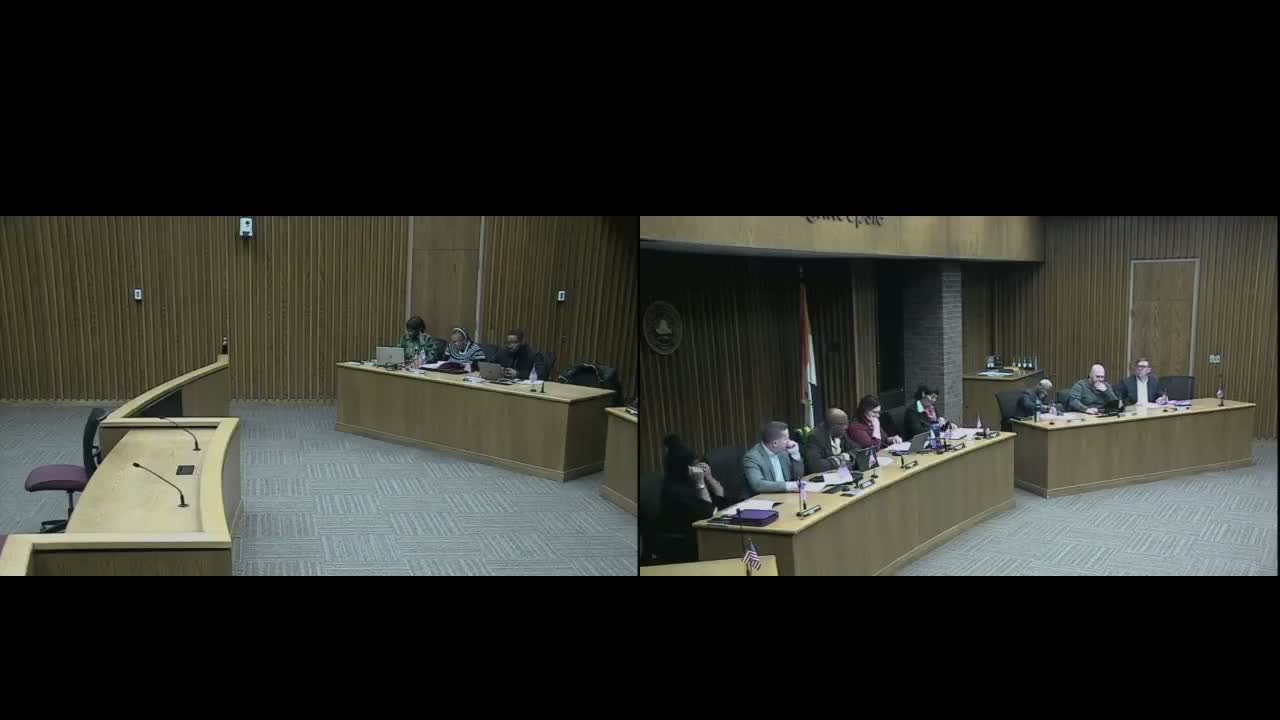
POUGHKEEPSIE, N.Y. — The Poughkeepsie Common Council on Jan. 7, 2025 passed Local Law 25-01, amending Chapter 10 of the city code that governs hawkers, peddlers and transient vendors to relax restrictions tied to prior criminal convictions where records are sealed under the state Clean Slate Act.
The measure changes Section 10-4 (veterans and restrictions based on prior convictions) and Section 10-20 (penalties), allowing applicants whose records are sealed under Clean Slate to omit those sealed convictions from applications and retain access to the licensing process subject to fingerprinting and review.
The change was presented to the council as a way to open legal vending opportunities to people who previously were denied licenses. City Chamberlain (Chamberlain) said the office saw numerous people refused under the prior ordinance and that "this will now allow for people who, have a criminal background and have, you know, changed their lives and want a hawk and pedal in the city would have now allowed them to have access to those licenses." The measure does not remove fingerprinting; vendors will continue to be fingerprinted and undergo a background check that routes through the police department.
Councilmember Henry opposed the ordinance as drafted, saying the city should not create "second class citizenship for people who are formerly incarcerated." He argued for a narrower safety window tied to recidivism statistics, proposing a three‑year stability period after release as a possible compromise: "the statistics show that when people are released from prison, the 36 months afterwards is the telltale sign whether they will recidivate or not." Henry said he could not support the law in its current form but acknowledged it was a step forward for access.
Corporation Counsel explained that the proposed local law is less restrictive than the current code because the Clean Slate Act means sealed convictions do not have to be disclosed; the counsel noted that the Clean Slate timelines still require people with felonies to be free of infractions for eight years and for misdemeanors three years before sealing applies. The counsel also noted that people denied a license may appeal to the council under existing procedures.
Councilwoman Brown asked the Chamberlain's office to produce a use-and-outcome report on the new pathway within the 2025 licensing season, ideally by August, to show how many applications were received, how many involved applicants with records, and how many were denied. Several members emphasized that passage of the local law should be followed by community education: the Chamberlain said the office plans a community forum in February focused on hawking and vending under the new rules.
A motion to pass the local law was made and seconded and carried on a voice vote recorded as "Aye." The motion and second were not identified by name in the meeting record. The ordinance will take effect in accordance with the city charter and any specified effective date in the local law text.
The council discussed the policy tradeoffs between expanding economic opportunity for people with sealed records and public-safety concerns; council members who supported the change called it a modest, incremental step that can be revisited if implementation data show problems.
The Chamberlain's office and Corporation Counsel will be the primary implementers; the council requested reporting back on application numbers and denials so members can consider further modifications.
A community education event on the new licensing pathway is scheduled for February 2025, according to the Chamberlain.