Get Full Government Meeting Transcripts, Videos, & Alerts Forever!
Get email alerts on the Public Safety Emergency Services topic
No spam. Unsubscribe anytime.
Firefighting commission rule rewrite advances; lawmakers debate removal of CPR requirement from volunteer incentive criteria
Summary
The committee approved a comprehensive rewrite of firefighting certification rules and the volunteer education‑incentive pay program, but members sharply debated a commission change that removed CPR as a requirement for incentive eligibility to lower barriers for volunteers.
The joint Government Operations Committee approved permanent rule changes to firefighter certification and the volunteer education incentive pay program on June 24, while lawmakers expressed concern over the commission’s decision to remove a required CPR certification from the incentive criteria.
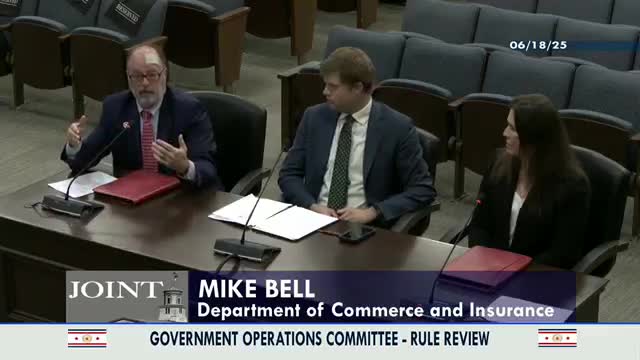
Mike Bell, assistant commissioner for the Division of Fire Prevention at the Department of Commerce and Insurance, and staff presented revisions intended to update standards to modern industry practice and make it easier for firefighters to participate in the incentive pay program. The rules were the product of stakeholder meetings and a January 2024 rule‑making hearing.
Under the proposed changes, the department removed a standalone requirement that volunteers hold current CPR certification to qualify for the incentive pay in order to broaden access for volunteers in rural areas, where instructors and training can be harder to access. Department staff said the change applies only to the eligibility criteria for the state education incentive; it does not supersede local department standard operating procedures that may still require CPR training.
Several legislators pushed back. Representative Parkinson, a retired firefighter and former CPR instructor, said CPR “is basic life saving” and urged the commission to reconsider removing the requirement, noting that volunteers respond to medical calls more often than fires in many places. Senator Bolling and others emphasized that volunteers are the backbone of rural emergency response and that basic lifesaving skills should be emphasized.
Department officials said they heard feedback from rural departments that adding CPR as a requirement for the state incentive discouraged participation; the commission adjusted the rule to try to increase enrollment in the 30‑hour training program that qualifies volunteers for the incentive pay. The committee approved the rules with a positive recommendation; department staff said they will continue outreach to encourage CPR training and to work with local departments to provide access when possible.