Get Full Government Meeting Transcripts, Videos, & Alerts Forever!
Get email alerts on the Water Fluoridation topic
No spam. Unsubscribe anytime.
Pasco council opens public process to consider ending water fluoridation
Summary
After extensive public comment from dentists, public-health advocates and opponents, the Pasco City Council voted 5-2 to begin the formal notification and public-engagement process required before any final decision to discontinue adding fluoride to the city’s drinking water.
The Pasco City Council voted 5-2 on June 16 to begin the public-notification and engagement process required before any decision to discontinue fluoridation of the city’s drinking water.
The motion, moved by Councilmember Milne and seconded by Councilmember Harpster, directs staff to carry out the notification steps set out in RCW 78.1250.21 and to return to council after public outreach and required notices are completed. The vote followed nearly two hours of public comment and presentation of state notification requirements by city staff.
City staff said the system serves roughly 23,700 customer accounts, covering an estimated 85,000 people, and that the decision whether to fluoridate is a local one subject to state notification rules. City staff outlined a notification plan that could include press releases; notices in utility bills (two billing cycles to reach all accounts); social media; automated phone calls; direct mail; and broadcast notices as needed.
The council item cited RCW 78.1250.21, which sets a 90-day customer- and Office-of-Drinking-Water notification requirement before a water system may adopt or discontinue community fluoridation. The ordinance-like notification step approved Tuesday does not remove fluoride; it starts the statutorily required public process.
Speakers at the meeting included local dentists and public-health advocates on both sides. Dr. Spencer Jelak, a Pasco dentist who helped bring fluoridation to the city in the late 1990s, told the council: “Fluoride works.” Dozens of residents and professionals spoke as well. Bill Osmundson, a retired dentist and public-health critic of fluoridation, urged the council to oppose fluoridation, saying, “I would recommend you vote against it.” Public commenters also cited national studies and modeling on cavities and costs presented by university researchers; one speaker warned that removing fluoridation nationwide could lead to tens of millions of additional cavities and large increases in dental costs over five to 10 years.
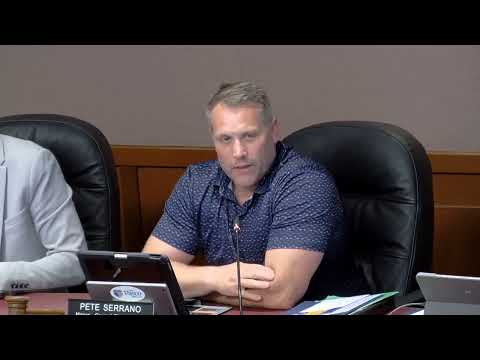
Councilmembers who voted to start the notification process were Parales, Grimm, Harpster, Milne and Mayor Serrano. Councilmembers Barajas and Blaisdell voted no.
Staff said they will schedule focused opportunities for public input and may coordinate expert presentations so council can hear evidence from both sides before making a final policy decision. The city manager emphasized that if the city does not follow the RCW notification requirements, it must continue its current fluoridation practice until it does.