Get Full Government Meeting Transcripts, Videos, & Alerts Forever!
Get email alerts on the Transit Microtransit topic
No spam. Unsubscribe anytime.
Brunswick presents microtransit plan, asks Glynn County for $150,000 contribution
Summary
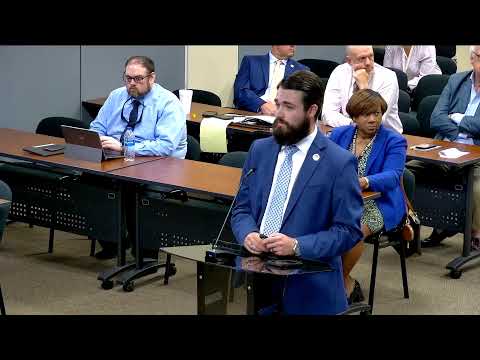
The Glynn County Board of Commissioners on June 17 heard a presentation from Regina McDuffie, city manager for the City of Brunswick, on the city’s proposed microtransit service and a request that the county provide $150,000 in initial funding.
The Glynn County Board of Commissioners on June 17 heard a presentation from Regina McDuffie, city manager for the City of Brunswick, on the city’s proposed microtransit service and a request that the county provide $150,000 in initial funding.
McDuffie said the city selected Via as a turnkey operator after an RFP and interview process and described the service as an on-demand, shared-ride system with smaller vehicles and “virtual” or digital stops rather than fixed routes. “The micro transit system is a public on demand system that kinda takes you where you want, when you want,” McDuffie said.
Why it matters: Brunswick officials said the service is designed primarily to support workforce mobility and to fill gaps for residents who lack reliable transportation to jobs, medical appointments and basic services. The city’s presentation cited local studies and said the service could help reduce vehicle miles and emissions while supporting economic development.
Key details from the presentation and discussion: - Operator: Via was described as a national supplier used in other Georgia communities; the city said Via will supply drivers, supervision, a call center and customer service and intends to hire local drivers and supervisors. McDuffie said the provider has systems “in 40 countries and over 750 communities, including Valdosta” and other Georgia locales. - Cost and funding ask: The city presented an estimated first-year contract cost of about $1,100,000 for operations plus roughly $150,000 for city administration and grant oversight. The city said it expects to contribute about $440,000 and sought $150,000 from Glynn County; the presentation also listed $57,000 in local payer revenue and said federal and state grants would supply the bulk of the remainder. - Five‑year forecast: The presentation included projected growth in operating costs if the service footprint and hours expand (city estimate: roughly $1.8 million in year two with a possible increase to about $1.9 million by year five). - Service area and limits: The initial service footprint will cover the city and nearby corridors, including I‑95 Exits 36 and 38, the airport and portions of Saint Simons Island; McDuffie said the city is limited to the federally defined “urbanized area” for the FTA/GDOT funds it plans to use and that boundary drives the initial map. She said the digital platform can expand the footprint later as data and funding permit. - Schedule and operations: The city said it is aiming to launch as early as October 2025. Proposed hours under consideration would support early morning workforce shifts (about 5:30–6:00 a.m.) and run into the late evening (9–10 p.m.) to accommodate hospitality shifts; fares were presented at about $2 per ride with premium surcharges possible for longer trips (for example, airport service). - Vehicles and accessibility: City staff said they expect to begin with about five to seven ADA‑compliant passenger vans with wheelchair access.
Discussion and unanswered items: Commissioners and county staff pressed for more detail on ridership projections, payback and data collection. A commissioner asked why some parts of the county (examples cited: Exit 29, Brooklyn, Fancy Bluff and Jekyll Island) are not in the initial footprint; McDuffie and John Hunter, the city’s planning and development director, said the federal/state funding rules tied to the urbanized area restrict the financed service area but that the program’s digital footprint can be expanded later and that the city will pursue other funding sources and partners to broaden coverage.
County officials also asked about fare collection and inclusivity. McDuffie said the system can accept cash, online payments, credit cards and pre‑purchased vouchers and that community partners could buy rides for employees. Staff said Via will provide fare tracking, driver communications and emergency communications systems.
Several county commissioners and staff urged quicker expansion and recommended that county and city managers coordinate on funding and footprint options. Commissioners asked county staff (named in discussion as Bill and Monica) to work with city staff to explore matching funds, subsidies from major employers and other revenue sources such as advertising on vehicles and visitor fees.
No formal county vote or funding commitment was recorded during the session. Commissioners asked staff to continue working with city officials and to return with more financial detail and options for phased contributions.
What remained unresolved: The presentation did not provide a final annual ridership estimate, a formal county funding commitment, nor a signed contract; several commissioners asked for explicit payback metrics (cost per ride and fiscal scenarios) before making a multi‑year commitment.
Ending note: City staff framed the program as an economic development and workforce tool that could adapt as ridership and funding evolve. County staff and commissioners expressed general support for continuing negotiations but requested more concrete ridership and fiscal modeling before committing county funds.