Get Full Government Meeting Transcripts, Videos, & Alerts Forever!
Get email alerts on the Paid Parking topic
No spam. Unsubscribe anytime.
Riviera Beach council approves modified paid‑parking plan after hours of public comment
Summary
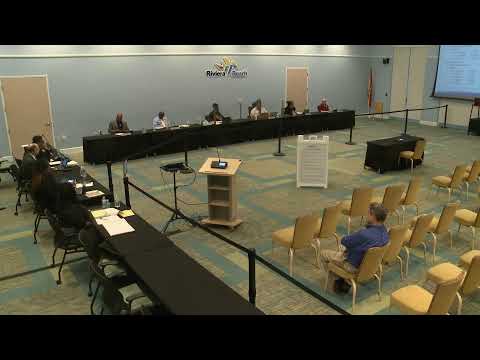
Riviera Beach — The City Council on Tuesday approved a modified paid‑parking program for the Ocean Walk and Marina Districts, aiming to reduce long‑term vehicle storage in preferred lots and generate restricted revenue for parking and mobility projects.
Riviera Beach — The City Council on Tuesday approved a modified paid‑parking program for the Ocean Walk and Marina Districts, aiming to reduce long‑term vehicle storage in preferred lots and generate restricted revenue for parking and mobility projects.
City Manager Jonathan Evans told the council, “This item before you this evening is seeking direction from the board as to how you wish to or how you wish to proceed concerning the provision of paid parking services.” The vote followed a two‑hour public comment period during which local business owners, marina users and island residents expressed concerns about costs to employees, validation logistics and impacts on summertime sales.
The council’s approval implements a camera‑based license‑plate recognition system operated by a third‑party vendor and sets a suite of rates and exceptions the council debated at the meeting. Under the amended plan the council approved, the city will offer an annual resident parking pass for $50 per vehicle (license‑plate tied), allow limited free parking windows in some lots, and authorize staff to whitelist employees and marina slip holders so those vehicles are not charged while working or when associated with a paid slip.
The plan reflects changes after months of outreach. Randy Sherman, the city’s chief financial officer, summarized the local history of the effort, saying the work “goes back to 2009 when the Ocean Mall reopened, after the major renovation.” Sherman told the council the city and the Community Redevelopment Agency (CRA) have studied paid parking repeatedly and that ordinance changes in April 2024 revised the city’s parking code.
Business owners at the meeting urged the council to delay or cancel the program, citing tight margins and seasonal revenue. Mark Polio, owner of Blue Water Boat Rentals at the marina, told the council: “I would just wanna be sure that all the things that we we hit on here, the white listing for employees and the, validation for our customers will be something that is gonna be definitely taken care of before we fully implement the parking program.” David Wilson, who owns a waterfront restaurant, said: “Anything that drops our sales, even I assume maybe 10%, we're gonna get clipped with this parking.”
Marina users also pressed for carve‑outs. Captain Alyssa Senn, who said she works on private vessels at the marina, urged the council to treat slip holders like residents: “I just think we need to make sure that the people that are renting slips and they're paying for slips are basically considered a resident of the marina whether they're a live aboard or not.” Council members directed staff to include marina slip holders in the resident‑pass eligibility conversations.
Staff estimates presented to the council showed a wide range of revenue depending on policy choices: roughly $2.2 million annually under the original, full‑fee model and about $500,000 under the modified plan the council approved. Evans emphasized the revenue is restricted by ordinance: funds must be used for parking system preservation, mobility and transportation‑related improvements and cannot be diverted to the general fund.
Evans outlined implementation steps: finalize a resident‑pass program and interlocal agreement with the CRA for jointly owned parcels, complete permitting and equipment installation for cameras and kiosks, run a public communications campaign and provide a 30–45 day notice to businesses and the public before activation. A vendor‑run call center will support users during the first 90 days; responsibility will then transition to city staff as the program is operational.
Technical and operational details were discussed at length. The city’s proposed system uses license‑plate recognition (LPR) cameras; payments will be accepted via mobile devices and kiosks. Mark Pratt, president of the vendor 1Parking, said about validations: “It's quite common that in a situation like this, there has to be a minimum purchase or otherwise, they do exactly what city manager was talking about, stay at the beach for 8 to 10 hours and run‑in and buy a a $2 Coke, and their their parking ends up being free.” Council members and staff discussed whether to require minimum purchases for business validation, whether to allow an initial free window (0–2 hours) and how to structure employee whitelists.
The council also set policy defaults to reduce business burdens: staff will work with business owners to whitelist employee license plates (so employees are not charged to park at work), design a validation process for customers when appropriate, and offer a reduced administrative resident pass for bona fide residents. The approved motion directs staff to return to the council with any interlocal agreement with the CRA and other required documentation prior to full activation.
Votes at a glance: The motion to approve the modified paid‑parking proposal with the meeting’s amendments passed on a unanimous roll call. The clerk recorded yes votes from Councilmember Davis Penier, Councilmember Gaeta, Chair Pro Tem Miller Anderson, Councilmember Spiritus and Chair Shirley Lanier.
The council’s action begins a phased rollout. Staff said they will hold additional community briefings with detailed rates, enforcement and validation procedures before activating the system.