Get Full Government Meeting Transcripts, Videos, & Alerts Forever!
Get email alerts on the Public Health Syringe Service Programs topic
No spam. Unsubscribe anytime.
Lewiston council pauses syringe‑service ordinance after hours of public testimony and council debate
Summary
City councilors and dozens of residents and public‑health experts debated a proposed ordinance to license syringe service programs (SSPs). Planning director John Connor and multiple councilors said the draft needs more work; council voted 6–1 to continue the public hearing and schedule a workshop.
Lewiston — After more than two hours of discussion and public testimony, the Lewiston City Council voted to continue the public hearing on a proposed ordinance to license syringe service programs and send the draft back for more work.
Planning Co‑Director John Connor told the council the draft "is not ready to be voted on" and urged more workshops and legal review. The council then heard more than two dozen public comments, including health‑care providers, people in recovery, harm‑reduction advocates and downtown business owners.
Why it matters: The ordinance would change Chapter 22 (business licenses) — article 18 — and could affect where and how syringe service programs operate in Lewiston. Supporters said current programs reduce disease and connect people to treatment; critics said some downtown locations have created nuisance behavior and public‑safety concerns. Councilors repeatedly asked for clearer zoning, stronger "good neighbor" requirements and more input from state public‑health officials.
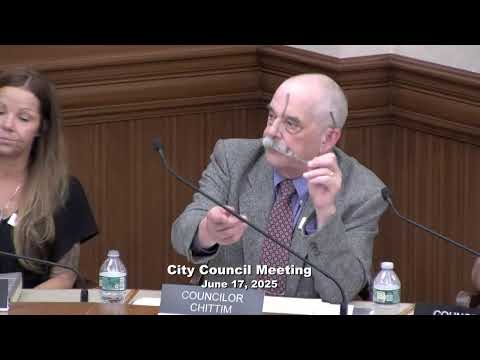
What the council discussed and decided - Director John Connor told the council he had expected additional workshops before a first reading and recommended the council provide staff with direction on key issues including exchange policy, zoning setbacks and program limits. "I do not feel that in its current version this ordinance is ready to be voted on," Connor said during his remarks. - Councilor Chris Chittum (Ward 1) identified three central questions: whether to require a 1‑for‑1 needle exchange, how to set zoning and setbacks and whether to limit the number of SSPs in Lewiston. He and others said they wanted a focused workshop rather than protracted discussion during a regular meeting. - Several councilors — including Nagy, Herriman and Gallant — said the draft as written would effectively prohibit SSPs from operating in Lewiston because of extensive buffer zones and limits on mobile services. - Maine CDC Infectious Disease Prevention Director Anne Sites told the council that restricting SSP access has been linked to worse public‑health outcomes and described alternatives other cities have used to reduce syringe litter while keeping programs accessible. - Multiple people in recovery and clinical staff from Spurwink and other providers gave personal testimony and data: a Spurwink physician said a patient who used SSPs avoided HIV and hepatitis C and later achieved sustained recovery. Supporters emphasized that SSPs provide wound care, testing and recovery coaching in addition to sterile supplies. - Opponents and some downtown business owners said syringe litter and visible drug use in the downtown area had increased and asked for tighter site controls and predictable hours.
Council action: Councilor Chittum moved — and the council voted 6–1 — to continue the public hearing and require a workshop and additional staff coordination with public‑health professionals before the ordinance returns for first reading. The mayor announced the workshop process and staff follow‑up.
What remains unresolved - The largest open questions are whether the city will require a strict 1‑for‑1 exchange, how far setback buffers from schools, residences and downtown businesses should extend, whether mobile exchange units will be permitted and whether a numerical cap on SSPs is appropriate. - Maine Housing and state public‑health officials were asked to participate in future sessions; councilors requested a clear list of policy choices and their likely public‑health impacts before drafting final ordinance language.
Quotes - "I do not feel that in its current version, this ordinance is ready to be voted on," Director John Connor said during his presentation. - "We need this program for our community to survive," recovery peer Dani Shiflett told the council, describing how SSP outreach led to a referral into treatment. - "Restricting syringe access has been linked to poor community health outcomes," Anne Sites of Maine CDC said, urging the council to consider alternatives used in other cities.
What's next: City staff will schedule a workshop, invite Maine CDC and local SSP operators to brief the council, and return the ordinance after revisions. The council set a procedural continuance and asked staff to supply clearer cost, operations and zoning options.
Ending: The topic drew strong, sustained public participation and divided views among councilors. The council’s next step is a focused workshop that staff and public‑health partners will use to produce a revised draft for a future public hearing and vote.