Citizen Portal

DOE defends 202(c) actions, supports transmission and nuclear acceleration at Senate hearing

3867976 · June 19, 2025

Get AI-powered insights, summaries, and transcripts

Subscribe
AI-Generated Content: All content on this page was generated by AI to highlight key points from the meeting. For complete details and context, we recommend watching the full video. so we can fix them.

Summary

Secretary Wright told senators the department has used emergency 202(c) authority to keep baseload plants online, reopened LNG export permit reviews, and supports transmission projects and small modular reactors; senators asked DOE to provide project modeling and to complete reviews of GRIP awards.

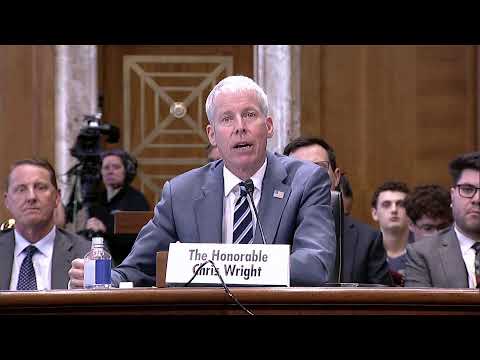
Secretary Wright told the Senate Energy and Natural Resources Committee that the Department of Energy has taken several operational steps to bolster grid reliability and speed certain energy projects.

Wright said DOE issued multiple 202(c) orders to keep baseload generation online during periods of system stress; the secretary described one such intervention in Southwestern Michigan, where DOE issued a 202(c) order "to keep a coal plant . . . open because of small reserve margins in MISO." He said the decision helped prevent a blackout two days later and that DOE is returning to its precedent for reviewing LNG export permits and "we've officially ended the previous administration's reckless pause on LNG export permits and have returned to regular order for reviewing and approving new permits."

Transmission and GRIP: Senators from Montana and North Dakota urged DOE support for large transmission projects. Senator Daines described the North Plains Connector, a proposed 420-mile high-voltage line that received a $700,000,000 GRIP grant to the Montana Department of Commerce; he asked the secretary to commit to advancing the award to meet a 2032 operational target. Wright said the department is evaluating GRIP projects through the same cross-functional review and that "interconnections between grids is certainly something The United States needs more of."

Nuclear energy push: Committee members and the secretary discussed accelerating deployment of advanced reactors. Wright said DOE plans solicitations and actions to get demonstration reactors critical at Idaho National Laboratory within an accelerated timeline and to support domestic fuel enrichment and licensing. "We want in 12 months from now to have reactors that are critical," Wright said, describing test reactors and a goal of speeding commercialization of small modular reactors.

Why it matters: Senators emphasized growing electricity demand, potential impacts from AI-related load growth, and the need for transmission and baseload capacity. Committee members asked DOE to provide the grid modeling and project evaluations that underlie department interventions and funding decisions.

Follow up: Wright agreed to provide modeling and pledged that the department's review process would produce project-specific findings. Senators asked for prompt timelines for GRIP reviews and for the Loan Programs Office to reengage with long-pending projects in their states.