Get Full Government Meeting Transcripts, Videos, & Alerts Forever!
Get email alerts on the Rental Property Policy topic
No spam. Unsubscribe anytime.
Council creates standing group to pursue rental-property study recommendations
Summary
The City of Superior accepted a rental-property study committee’s report and approved creation of a standing committee to pursue recommendations including community surveys, public forums and options for registration or licensing of rental properties.
The City of Superior accepted a report from an ad hoc rental-property study committee and directed staff to form a standing committee to carry out the panel’s recommendations.
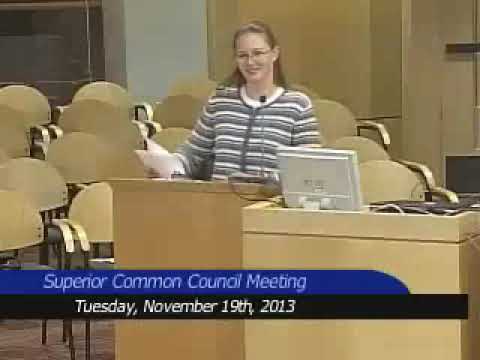
Mayor Hagan introduced the ad hoc committee’s report and asked for a motion to adopt and for authority to create a standing citizen‑oriented committee. Millie, chair of the ad hoc committee, said the group reviewed prior studies, examined other cities’ programs and spent “countless hours” meeting with city staff and community members. She said the committee recommends more community input via a survey for landlords and tenants and public forums to gather broader comment.
Millie said the committee discussed both registration and licensing models as a way to identify rental properties and ensure housing unit safety, and emphasized the need for a deliberate, well‑planned approach. “We do need something in our place in our community,” she told the council, adding the effort should involve police, fire and building inspection staff to reflect departmental perspectives.
A motion to adopt the report and to create a standing committee passed on voice vote. Councilors who had served on the ad hoc panel and several staff members in building inspection and code compliance were introduced during the presentation; Millie acknowledged committee members and staff participants.
Councilors said they supported the aim of improving rental housing quality and agreed that further public engagement and careful program design were necessary. No specific registration or licensing ordinance was approved at the meeting; councilors said additional public input and follow‑up work would precede any ordinance or fee decisions.
The council’s action adopts the committee’s recommendations in principle and authorizes formation of a standing committee to design next steps, including a survey, public forums and interdepartmental coordination to shape any registration or licensing program.