Get Full Government Meeting Transcripts, Videos, & Alerts Forever!
Get email alerts on the Railroad Quiet Zones topic
No spam. Unsubscribe anytime.
Superior council rejects quiet-zone funding in 2014 CIP update
Summary
After months of study, the City of Superior voted to approve its 2014 Capital Improvements Plan update without allocating funds for railroad quiet zones, citing lack of available funding and federal constraints on horn suppression.
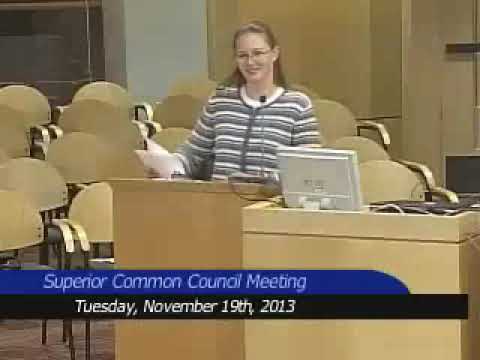
The City of Superior voted Nov. 19 to approve the 2014 Capital Improvements Plan (CIP) update with no funding allocated for railroad quiet zones.
The decision follows several staff reports and months of analysis on the cost and feasibility of creating quiet zones at multiple grade crossings. Assistant Public Works Director Janico briefed the council on a five-year plan and said the city faces two basic choices to pay for quiet-zone work: reduce funding for other projects or increase debt. Janico told the council, “There is no money tree,” and said the Office of the Commissioner of Railroads (OCR) and federal standards limit options.
Janico told councilors the city used a standardized Federal Railroad Administration crossing inventory and mapped half‑mile buffers around crossings to estimate resident exposure and to prioritize crossings by train volume multiplied by nearby housing counts. He said prior studies and recent inspections by the OCR have sometimes recommended closing crossings rather than creating quiet zones, and that federal rules require any quiet-zone treatment to apply across a contiguous zone, not a single isolated crossing.
Councilor McDonald moved to adopt the 2014 CIP update with no funding for railroad quiet zones; Councilor Sweeney seconded the motion. The motion carried on a voice vote. The council did not record a roll-call tally; the clerk announced the motion carried at the meeting.
Several councilors and residents described persistent neighborhood noise and long-standing frustration with train horns. Councilor McKenzie said she and constituents are “pretty close to the switching yard” and that horns sometimes sounded “all hours of the night.” Councilor Olsen praised staff work and asked that the city retain the study so it can act if funding or federal requirements change.
Staff described next steps as preserving any existing quiet-zone signage and documentation to avoid losing previously established quiet zones, and staying alert for federal or grant funding opportunities that could make projects feasible without cutting other city priorities. Janico said the city will follow up with SRF Consulting, the consulting firm that previously worked on crossings, and keep the material current for future funding opportunities.
The council’s formal direction was procedural: adopt the 2014 CIP as presented and make no allocation for quiet-zone construction at this time. The item was discussed in the Committee of the Whole portion of the meeting and concluded with the council’s motion and vote.
Residents who testified and councilors who commented said the issue is ongoing and that there are multiple possible technical fixes (gates/lights) that staff estimated would cost far more than signage alone—Janico noted that lights and gates can cost hundreds of thousands of dollars per crossing. No new funding source was approved; the council directed staff to retain the analysis and pursue opportunities to protect existing quiet-zone status and seek outside funding.