Get Full Government Meeting Transcripts, Videos, & Alerts Forever!
Get email alerts on the Waste And Recycling topic
No spam. Unsubscribe anytime.
Council approves five-year extension of recycling contract with Hartel and DBJ after contested debate
Summary
The Superior Common Council voted 7-3 on Dec. 3 to extend the city’s curbside recycling contract with Hartel and DBJ Disposal for five years beginning Jan. 1, 2014. Council debate centered on the use of a contract-extension option rather than an open rebid and on local economic and service considerations.
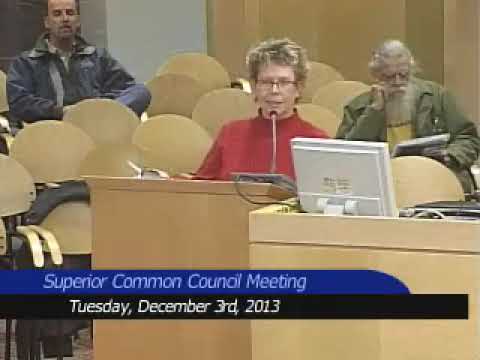
The Superior Common Council approved a five-year extension of the city’s curbside recycling contract with Hartel and DBJ Disposal on Dec. 3, voting 7–3 on a roll call to continue the current provider’s service beginning Jan. 1, 2014.
Public Works Director Jeff Gussman told the council the existing contract, in effect since 2009, contains an extension provision. Staff negotiated an extension rather than rebidding, and the negotiated starting rate for the first year of the extension is lower than the city’s current rate, Gussman said. Gussman and others cited improved service and higher tonnage as reasons to extend rather than rebid.
Opponents questioned whether a five-year extension without a new competitive bid was appropriate. Councilor Olson (appearing in the discussion as Olaf/Olson interchangeably in the record) and Councilor McKenzie argued the extension undermined the city’s stated interest in local economic development because other local haulers had no opportunity to bid. Councilor Bender asked how many bidders there had been; staff replied there were none because this action relies on an extension option rather than opening a new competitive bidding process.
A Hartel representative addressed the council and reported the company has doubled participation and nearly doubled tonnage over the five years of the contract. The representative said Hartel employs city residents, including some employees with disabilities, and operates a local sorting facility in Proctor; he said recycle-center sorters earn about $11–$12 per hour. The company also said it reduced the number of accounts it initially planned to serve to save the city money after a joint review with the finance department.
The agenda included a rate spreadsheet; staff said the city’s current rate was about $3.02 per cart per month and that the extension’s first-year rate would be lower (agenda spreadsheet provided year-by-year figures). Councilor McKenzie, Councilor Olsen and Councilor Bender voted against the extension. The roll-call yes votes were Councilors Dalbec, Fennessy, Sweeney, McDonald, Missolia, Finsland and Herrick. The motion passed, 7–3.
Council members who supported the extension defended the standard business practice of negotiated extensions in multi-year municipal contracts, stressing continuity of service and the potential for better pricing with longer-term commitments. Supporters also noted Hartel’s local sorting capacity and employment of residents. Several councilors who opposed the extension said they would have preferred a rebid or a shorter-term extension to preserve competitive opportunity for other local firms.
The council placed the extension on the consent agenda during the meeting after earlier discussion at the finance committee. The contract extension will affect residential curbside service for single-family homes and buildings up to four units under the city contract; larger apartment buildings may be served under different arrangements.