Get Full Government Meeting Transcripts, Videos, & Alerts Forever!
Get email alerts on the Transportation Rail Safety topic
No spam. Unsubscribe anytime.
Council orders follow-up on railroad quiet-zone plan after lengthy public debate
Summary
The Superior Common Council heard extended discussion on establishing railroad quiet zones across the city and voted to return the issue to committee with cost and capital-improvement scenarios for Council review.
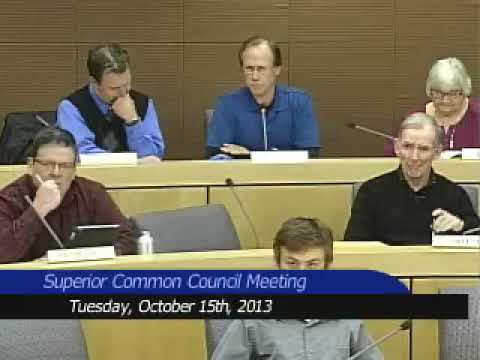
The Superior Common Council directed staff on Oct. 15 to return a detailed quiet‑zone plan to the Committee of the Whole after more than an hour of staff briefing, council questions and public comment about nighttime train horns and the cost of safety upgrades.
City staff and the council spent the meeting outlining options for supplementing crossing safety measures so trains could legally stop sounding horns at crossings. The council asked Public Works staff to prepare prioritized scenarios — including financing options and how improvements would fit into the city’s capital improvement program — for discussion at a November Committee of the Whole meeting.
Assistant Public Works Director Todd Janigo told the council that the city faces many active railroad crossings and that estimates vary widely by site. “We’ve got an estimate for the 20th Street crossing at about $460,000,” Janigo said, and warned that design, railroad coordination and construction can take months to more than a year. He described a technical and federal regulatory process that includes risk indices and requirements for active warning equipment such as lights, gates and in some cases constant‑warning timing.
Residents and councilors described recurring noise and sleep disruption from horns, particularly in the south side and near the 20th Street rail yard. A resident identified only as George told the council the sounds “wake you up” and described impacts on elderly neighbors and assisted‑living tenants. Several councilors said the impacts on quality of life and housing stability make quiet zones a council priority; others urged caution because of large financing needs and competing capital projects.
Staff and councilors discussed three approaches that had been used elsewhere: (1) install required active warning devices at crossings, (2) close lesser‑used crossings to reduce the number of horn events, and (3) proceed in phased priority bundles based on train volume or other local measures. Janigo and the city’s consultant noted that some crossings previously classified as “pre‑rule quiet zones” lost that status after accidents raised their federal risk index, forcing either safety upgrades or resumption of horn use.
Councilor Ann Olson moved to refer the item to the November Committee of the Whole with direction for staff to return cost scenarios tied to the CIP and to propose five‑year implementation options prioritized by train volume. The motion was seconded, put to a voice vote and approved.
The council did not adopt any construction contracts or assessments at the Oct. 15 meeting; the referral requires staff to present specific cost, funding and timeline options for council consideration.
Next steps: staff will return to the Committee of the Whole in November with prioritized project bundles, cost estimates, and financing scenarios showing how quiet‑zone work could be paid for from the CIP or by debt issuance, per council direction.