Get Full Government Meeting Transcripts, Videos, & Alerts Forever!
Get email alerts on the Flood Claims topic
No spam. Unsubscribe anytime.
Residents say city worker's actions flooded 17 basements; liability claims committee denied payouts
Summary
Residents told the Common Council that removal of a sanitary sewer cover after a June storm sent water into basements of about 17 homes; the city's liability claims committee denied the group's claims and residents were told limited political authority prevents the mayor or council from intervening.
At the Dec. 4 Common Council meeting in Superior, residents affected by a June storm told the council that a city worker's removal of a sanitary sewer cover sent floodwater into about 17 basements and that the city's liability claims committee denied their requests for compensation.
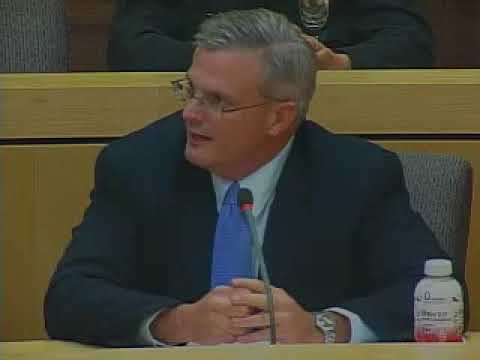
The residents, led by Gretchen Flaherty, whose home recorded 21 inches of basement flooding, said the cover was removed hours after the rain had stopped and that water ran into homes from about 3 p.m. until early the next morning. Flaherty said the group has spent out-of-pocket for immediate cleanup and are trying to avoid litigation: "We are trying very hard to avoid litigation with the city," she said.
The matter matters because the residents maintain the flooding resulted from city operations, while the claims committee's denial leaves homeowners without an administrative remedy and facing potential lawsuits. City officials told the meeting that the committee was created by ordinance to handle liability claims and that, under current rules, the council and mayor have limited authority to overturn its decisions.
Gretchen Flaherty, a homeowner at 1505 East Tenth Street, described the sequence and the damage: "Our basement received 21 inches of water." She said neighbors who had dry basements before the storm flooded after the sanitary sewer cover was removed and that the group filed timely claims. She said the claims committee later sent a denial letter that she called a boilerplate response: "The letter ... basically states that the city received a whole bunch of rain that day, and that's why our claim was denied."
Steven Olsen, another resident at 1514 East Tenth Street, told the council the sudden flooding upended households and expressed frustration about the lack of recourse: "It's a very unfortunate situation. I'm frustrated that there was no due process in this, in this whole proceeding."
City Attorney Frog Perl explained the city's legal posture and why elected officials are advised not to meet claimants when claims or potential litigation exist. Perl said the claims committee was established by ordinance in the early 1990s "to take it out of the political arena" and to remove elected officials and staff from deciding liability claims. He told residents he had "recommended to the mayor, that he not be in the business of meeting with individual claimants or group of groups of claimants" when there is potential litigation.
Perl added that municipalities may lawfully delegate liability-claims review to an appointed committee and said the claims committee reviewed what it considered the salient facts and issued unanimous decisions. He acknowledged that denial letters often contain little detail: "The denial letters ... usually don't have a lot of detail."
Council members and staff discussed procedural changes about how claims committee actions appear on the council agenda. Council members said committee minutes had been listed on the consent agenda and agreed to reclassify liability-committee minutes as communications so they are not treated as items the council is being asked to approve without discussion.
No change to the liability committee's final authority was made at the meeting; councilors said the only available legal remedy for claimants who disagree with the committee's decision would be to pursue court action. Councilors also directed staff to make publicly available resources (including information published in the Telegram) on flood assistance and relief options.
The meeting included several councilors expressing sympathy and urging continued outreach; residents repeated they are trying to avoid litigation but felt they were being given the "runaround." Additional details from residents: one household spent about $800 on pumping supplies; the group estimates roughly 70 total flood/sewer-backup claims citywide were processed by the committee.
The council did not reverse any of the claims committee decisions at the meeting. Residents said they would consider next steps, including possible appeals through the courts, and asked the council to provide clearer minutes or explanations of the claims committee's determinations.