Get Full Government Meeting Transcripts, Videos, & Alerts Forever!
Get email alerts on the Woody Biomass topic
No spam. Unsubscribe anytime.
Lawmakers weigh bills to bar woody biomass from municipal standards and alternative energy subsidies
Summary
Legislators, municipal officials and public health advocates urged the committee to remove woody biomass from municipal lighting plant greenhouse gas standards and from the Alternative Energy Portfolio Standard, citing air pollution, public health and climate concerns; proponents said a looming statutory effective date makes action urgent.
Legislators, municipal officials, environmental groups and public health advocates urged the Joint Committee on Telecommunications, Utilities and Energy to pass bills that would prevent woody biomass from qualifying as a clean energy source for municipal lighting plants and from receiving incentives under the Alternative Energy Portfolio Standard (APS).
"This is not an abstract policy issue. This is about air our children breathe, the future of our climate, and the integrity of our energy goals," Senator Gomez said when he introduced the measures (S.2288 and S.2287 and their House counterparts). Witnesses told the committee that allowing woody biomass to count toward municipal greenhouse gas standards or to receive APS credits would effectively subsidize facilities that produce significant fine-particulate and greenhouse-gas emissions.
Testimony described a specific urgency: language in the Next-Generation Climate Roadmap creates municipal lighting plant (MLP) greenhouse-gas standards that, without correction, could allow biomass to be treated as a non-carbon-emitting source beginning Jan. 1, 2026. Several witnesses said the timeline creates an immediate need to amend statute so municipal utilities cannot enter into long-term purchase agreements that would finance new biomass facilities.
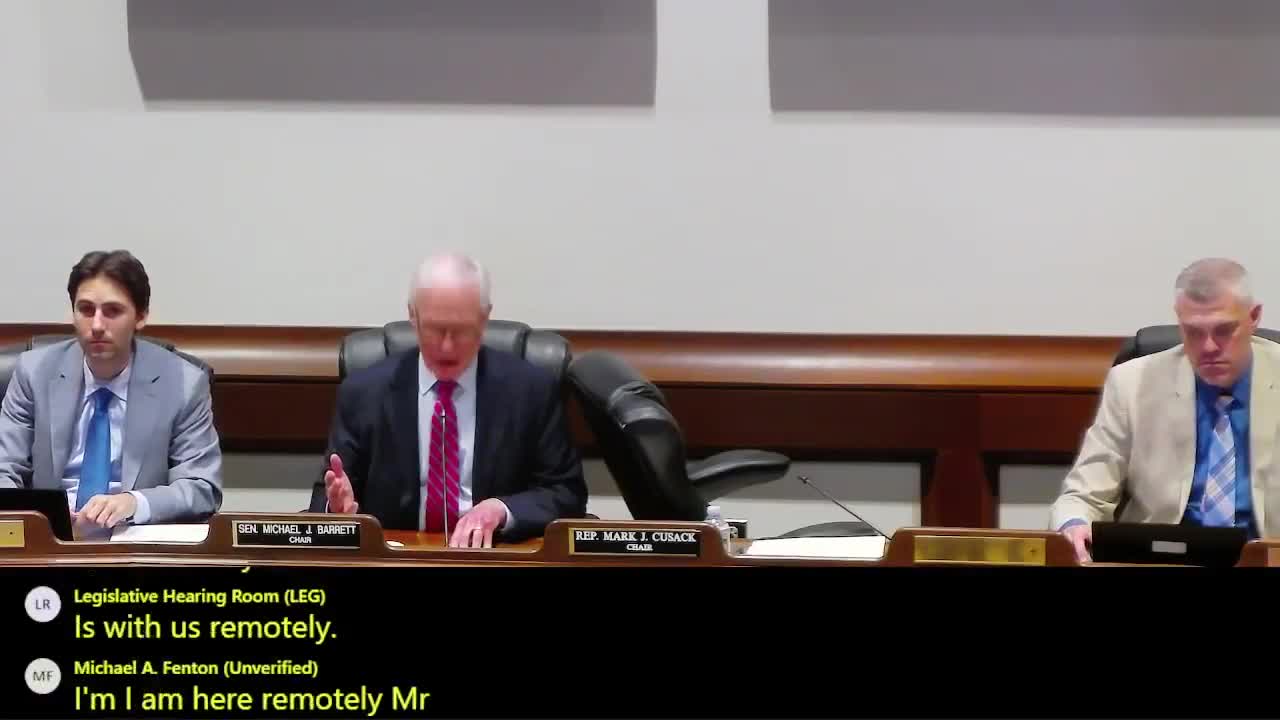
Municipal officials from Springfield described direct local experience. Michael Fenton, president of the Springfield City Council, told the committee that his city has opposed a proposed commercial-scale biomass-fired facility in East Springfield for more than a decade and that the city's public-health concerns extend to some of the worst asthma rates in the region. "These two bills in combination would remove woody biomass from the alternative energy supply definition and woody biomass from the greenhouse gas emission standards for municipal light companies," Fenton said.
Public-health witnesses cited particulate matter (PM2.5) as a particular risk. Jessica Collins, executive director of the Public Health Institute of Western Massachusetts, described local data: Springfield has improved some air-quality metrics but continues to register among communities with elevated asthma hospitalizations; the American Lung Association and other sources were cited to show persistent elevated asthma burdens in parts of Hampden County. Witnesses described mechanisms: microscopic particulates penetrate deep into the lungs and have been associated in epidemiological studies with asthma exacerbations, cardiovascular disease and other conditions.
Environmental groups and climate coalitions urged the committee to close what they called a loophole that would allow companies to rebrand wood-burning facilities as qualifying clean energy. Conservation Law Foundation, Sierra Club, Mass Power Forward and other groups filed testimony urging repeal of biomass eligibility in both the MLP standard and the APS.
Proponents of clean modern wood-heat technology testified on a narrower point: Chris Egan of the Massachusetts Forest Alliance said modern pellet and chip systems with emission controls (for example, electrostatic precipitators) can sharply lower particulate emissions compared with older stoves, and that incentives could be tailored to systems with effective controls. Egan also said the number of APS-eligible modern wood-heat systems is small and that their total cost to ratepayers would be minimal if properly targeted.
Several witnesses drew a distinction between small controlled modern systems and large commercial biomass power plants; multiple critics said a commercial-scale plant such as the proposed Springfield facility would emit far larger quantities of PM2.5 and carbon and would disproportionately affect low-income and environmental-justice communities.
No formal committee vote was taken at the hearing. Multiple witnesses asked legislators for prompt action to prevent contracts or subsidies from supporting new woody-biomass projects.