Get Full Government Meeting Transcripts, Videos, & Alerts Forever!
Get email alerts on the Medication Access Gender Affirming Reproductive topic
No spam. Unsubscribe anytime.
Senate adopts amendment allowing state pharmacies to distribute mifepristone and gender-affirming medications
Summary
Amendment 51, presented by Senator Julian Cyr, clarifies the ability of Department of Public Health-operated pharmacies to distribute mifepristone and gender-affirming medications from the state stockpile; the Senate adopted the amendment.
Senator Julian Cyr, senator from the Cape and Islands, explained Amendment 51, titled "affirming health care," which would allow pharmacies operated by the Department of Public Health to distribute gender-affirming medications in addition to utilizing the state supply of mifepristone. "This amendment seeks to allow pharmacies operated by the Department of Public Health, the ability to distribute gender affirming medications, in addition to utilizing the state stockpile of mifepristone," Cyr said.
Cyr framed the amendment as a response to what he described as mounting legal and policy challenges to reproductive and transgender health care access elsewhere in the country. He cited recent federal court and Supreme Court developments and said Massachusetts must ensure supply and distribution channels for these medications remain available for patients and providers in the Commonwealth. "We must ensure continued supply of essential medications with forces coming after access to gender affirming medications as well," Cyr said.
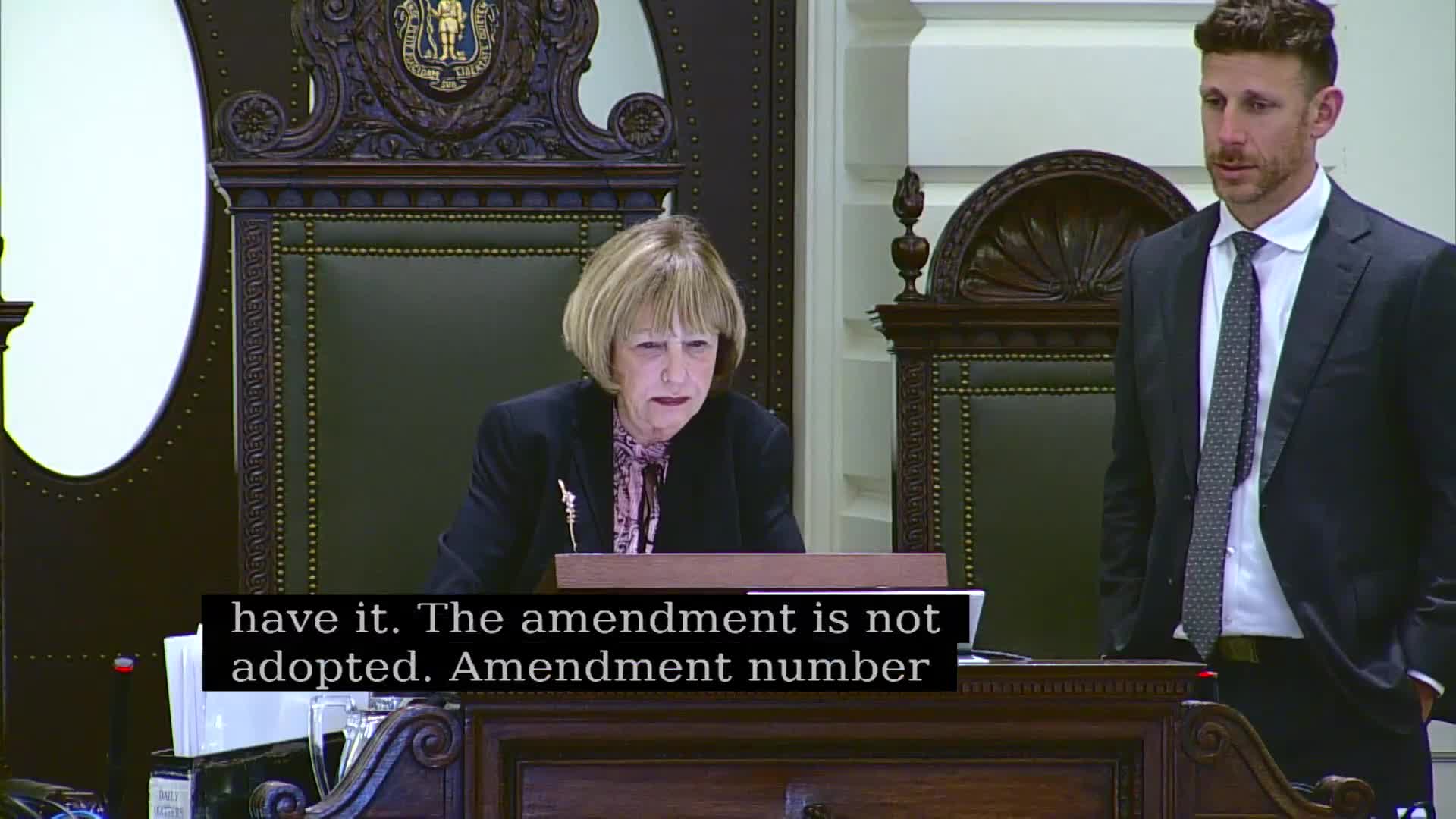
The Senate adopted the amendment on a voice vote; the clerk announced, "The ayes have it. The amendment is adopted." The amendment is expressed in the supplemental budget language (referred to in the session as "section 29") and modifies how the state can use stockpiled medications in DPH-operated pharmacies; it does not itself change criminal law or federal regulatory authority.
Proponents described the provision as a protective measure to maintain access for patients in Massachusetts, while opponents did not prevail at the voice vote. The transcript includes references to a 6–3 Supreme Court decision discussed by Cyr; the article reports that reference as part of his remarks but does not endorse the legal characterization beyond his statement.
The amendment's adoption adds distribution flexibility to the state stockpile policy as presented to the Senate during supplemental budget consideration.