Get Full Government Meeting Transcripts, Videos, & Alerts Forever!
Get email alerts on the Chronic Pain Non Opioid Options topic
No spam. Unsubscribe anytime.
Committee hears support for S863 to expand non‑opioid chronic pain care and data collection
Summary
Advocates and clinicians told the Joint Committee on Healthcare Financing that S863 would improve access to non-opioid medications and multidisciplinary pain care for MassHealth members and create a data system to measure chronic pain prevalence and costs.
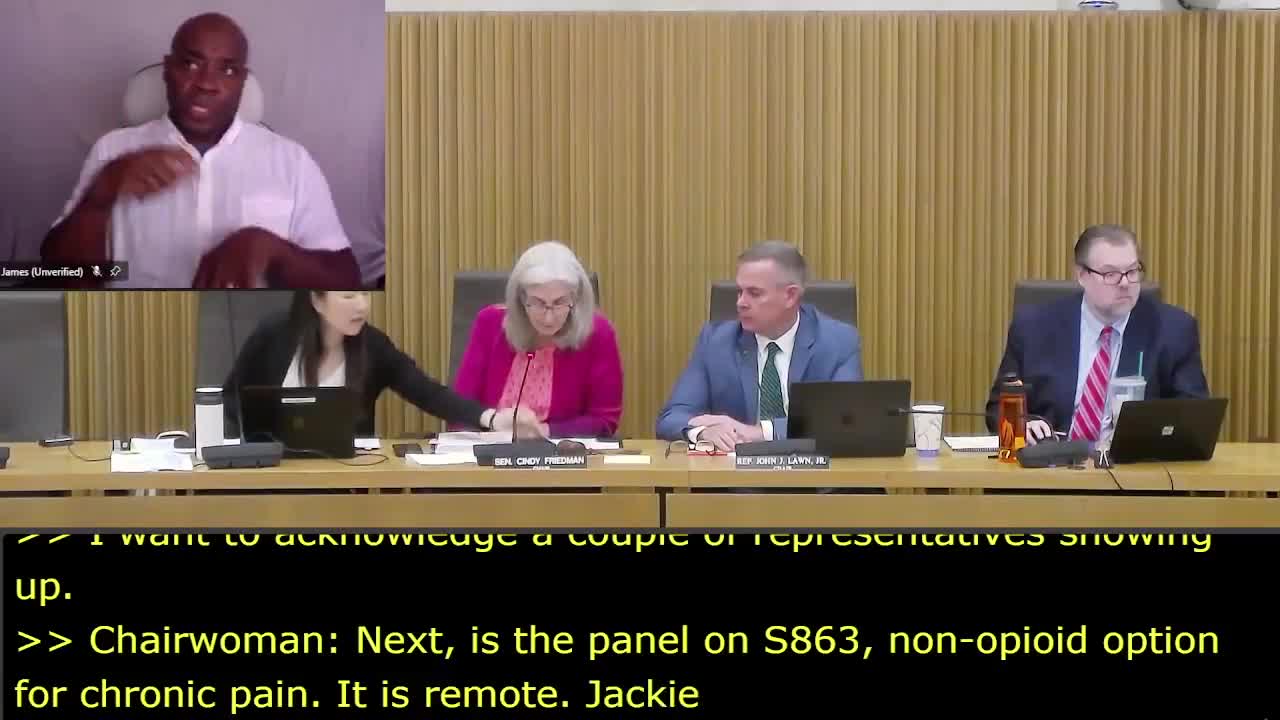
Advocates, clinicians and patients urged the Joint Committee on Healthcare Financing to support S863, legislation described in testimony as aiming to expand non‑opioid treatment access and coordinate chronic pain care for MassHealth members.
Cindy Steinberg, policy council chair of the Massachusetts Pain Initiative, told the committee that chronic pain has become a disease of the nervous system and that many patients live for years without appropriate care. "S863 would go a long way toward addressing these problems and improving the care of individuals on MassHealth by providing care coordination and support to help members access appropriate providers and specialists," Steinberg said.
Nurse practitioner Jackie Nathan and other clinicians testified that primary care providers often lack time and training to manage complex persistent pain, and they supported provisions in S863 for primary care training, care coordination, and coverage parity so non‑opioid medications are not subject to additional insurer restrictions. Nathan said the bill’s measures would help ensure MassHealth patients can access multidisciplinary approaches — physical therapy, behavioral health, social work and pain management — that research shows can improve functioning for many people with chronic pain.
Patients with chronic conditions including juvenile‑onset rheumatoid arthritis, endometriosis and sickle cell disease described long delays in diagnoses, repeated denials or confusion about coverage, and the social consequences of inadequately managed pain. "Giving assistance to people, especially from lower socioeconomic statuses where pain is most prevalent in navigating complex needs, would help ensure no one...lose their potential," said Amanda Boda, who testified as a MassHealth member and PhD candidate.
S863 would also direct the state to collect and report data on prevalence, demographics, utilization, and cost for pain conditions — a step proponents said is necessary to measure the scope and plan services. Testimony repeatedly urged the committee to favorably report the bill to allow legislative debate on specifics such as benefit design and provider training standards.
No formal committee vote occurred during the hearing; chairs invited written testimony and public comment.