Get Full Government Meeting Transcripts, Videos, & Alerts Forever!
Get email alerts on the Budget Appropriations topic
No spam. Unsubscribe anytime.
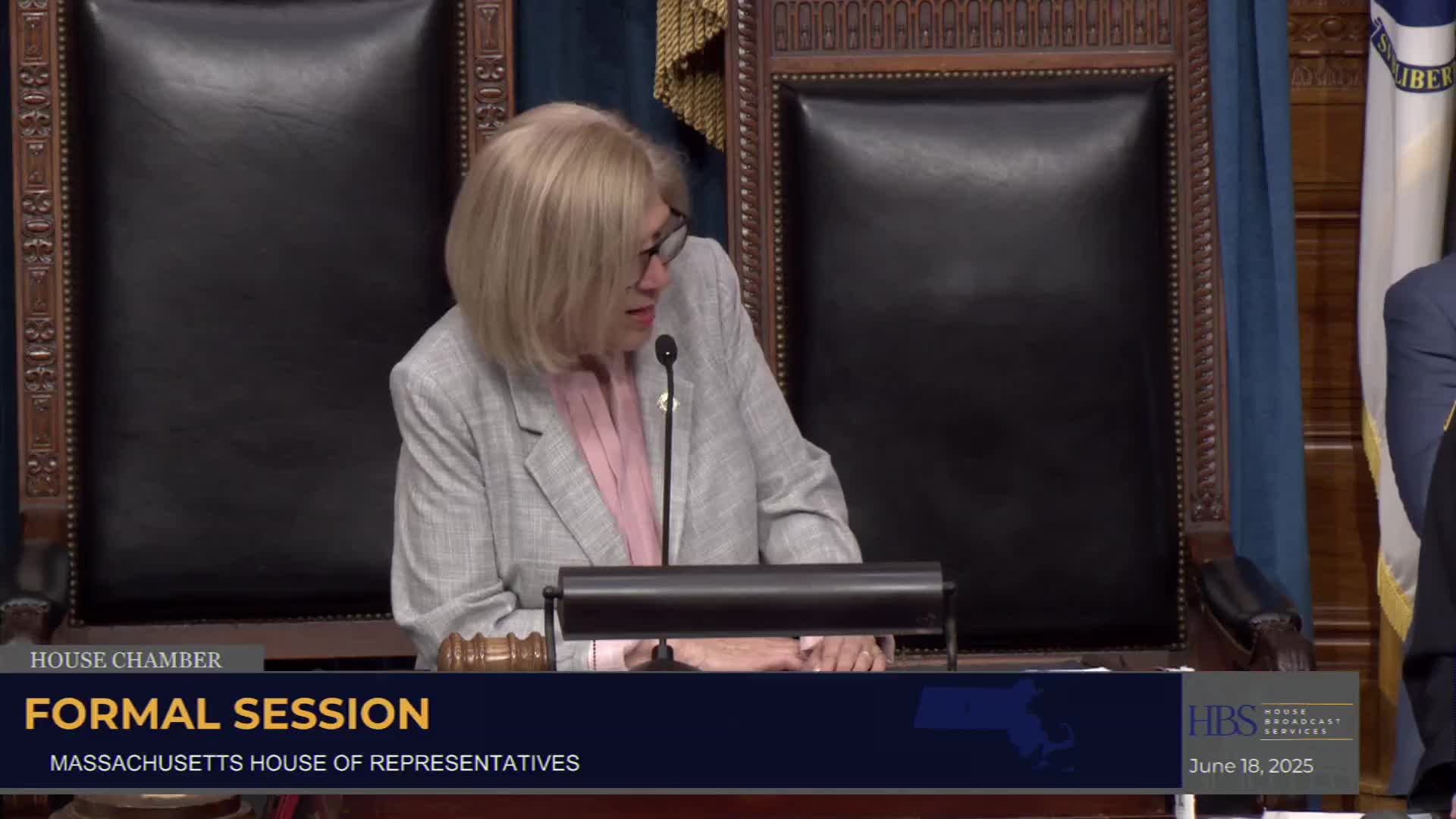
Mass. House accepts $1.38 billion supplemental spending plan splitting fair‑share surtax surplus between transportation and education
Summary
The Massachusetts House accepted a conference committee report on a supplemental appropriations bill that directs roughly $1.38 billion — mostly fair‑share surtax surplus — to transportation and education, including major allocations for the MBTA and special education reimbursements.
The Massachusetts House of Representatives accepted a conference committee report and passed House Bill 4227, a $1.38 billion supplemental appropriations measure that draws largely on surplus revenue from the fair‑share surtax and directs the bulk of the funds to transportation and education.
Representative Michael Wicks of Boston, who presented the conference report on the floor, said the bill reflects the House’s effort to balance spending between education and transportation after FY24 produced a larger‑than‑expected surtax revenue surplus. “The legislation that is before you today is the final conference committee report on how to spend the FY '24 surplus funds from the fair share surtax,” Wicks said.
The conference report allocates about $1.3 billion drawn from surtax surplus, with $716 million (about 54%) dedicated to transportation and roughly $593 million to education and educator‑related projects. Wicks outlined transportation commitments that include $535 million for the Massachusetts Bay Transportation Authority (MBTA) — split into $300 million to replenish MBTA budget reserves, $175 million for workforce and safety initiatives tied to Federal Transit Administration recommendations, $40 million for physical infrastructure upgrades, and $20 million for low‑income fare relief. The bill also provides supplemental Chapter 90 municipal roadway aid, $50 million for regional transit authorities and $16.4 million for municipally owned small bridges and culverts.
On education, the bill aims to spend $593 million on educator and school needs, including $248 million for special education “circuit breaker” reimbursements covering FY25 and FY26 costs to help meet the 75% reimbursement target in the Student Opportunity Act; $150 million for higher‑education deferred maintenance; $100 million for vocational school capital improvements; $45 million for workforce and quality supports for early education providers; $20 million to support endowment matches at UMass and state universities and community colleges; and $10 million for the Green School Works clean‑energy program.
Wicks said $250 million of FY24 surtax collections were deposited into an excess revenue reserve account before the surplus was allocated and that the Legislature intends to continue pursuing a relative balance between transportation and education spending in future surplus years.
Members ordered a roll call on the measure; the House adopted the emergency preamble and passed the bill to be engrossed. The displayed tally on the roll call showed 148 yeas and 4 nays. The bill’s passage sends the conference committee report forward for final processing under legislative rules.
The bill also tasks the inspector general with a review of special‑education circuit breaker costs and potential efficiencies, a step Wicks said is intended to help control future costs for both the state and municipalities.
Details on specific municipal allocations (for example, the distribution formula for Chapter 90 aid) and implementation timing were not specified on the floor during the presentation and will be handled in executing departments or subsequent guidance.