Get Full Government Meeting Transcripts, Videos, & Alerts Forever!
Get email alerts on the Advanced Air Mobility topic
No spam. Unsubscribe anytime.
Beta Technologies, Metro Aviation seek Louisiana support for electric aircraft network; operators highlight patient-transport benefits
Summary
Beta Technologies and Metro Aviation described electric vertical and conventional aircraft, charging infrastructure already deployed and a plan for EMS operations; operators asked the state to help fund additional charging stations and training capacity.
Beta Technologies and Metro Aviation told the Louisiana Advanced Aviation and Drone Advisory Committee they are operating electric aircraft and a compatible charging network and asked for state investment in charging infrastructure and workforce training to expand emergency medical and regional transport services in Louisiana.
The presentations outlined two parts: Beta Technologies described aircraft and its charging “cube” network, and Todd Stanberry of Metro Aviation explained how lower acquisition and operating costs could enable expanded emergency medical services. The companies said they already operate chargers and aircraft in other states and have two chargers active in Louisiana, including one at Baton Rouge’s BTR airport.
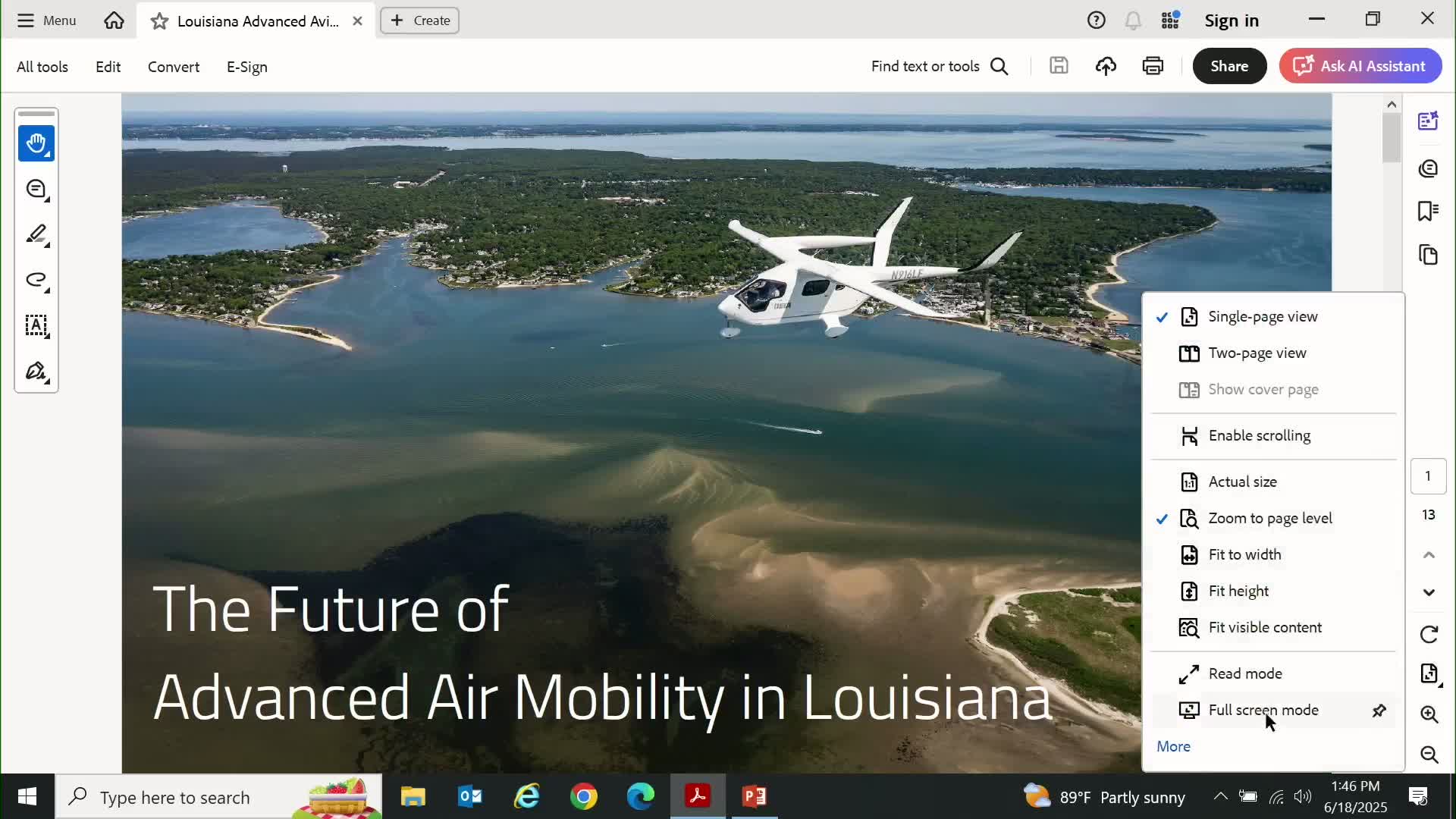
Christopher Miller, network development at Beta Technologies, said the company has deployed about 50 charging stations nationwide and emphasized a non‑proprietary approach: “This is completely multimodal and interoperable. It’s non proprietary. What’s good for all is good for all.” Miller showed photos and routes Beta has flown to demonstrate aircraft and charger operations and said the company manufactures its charger hardware in the United States.
Todd Stanberry, who identified himself as an owner of Metro Aviation, described the company’s operational case for electric aircraft in EMS. Stanberry said Metro operates 175 aircraft and that “309 of them are in the state of Louisiana” (referring to employees in‑state), and argued the electric systems could halve acquisition costs and reduce operating expenses. He said plans include buying 20 aircraft and completing medical interiors in Louisiana, which would create local manufacturing and training jobs.
Panel members and DOTD staff focused on infrastructure and regulatory integration. Committee members asked whether existing heliports and airport helipads could host vertiport chargers; Miller said the FAA is developing guidance and Beta’s chargers are designed to work at airports and heliports. Miller outlined aircraft capabilities discussed during Q&A: conventional electric aircraft range “about 250 to 300 nautical miles” and the VTOL configuration “about 100 to 200 nautical miles,” and passenger capacity for the discussed aircraft is five passengers plus a pilot. Miller and Stanberry emphasized flight‑planning discipline and FAA reserve requirements remain part of operations.
Metro Aviation asked the state to help accelerate charger deployment, proposing an initial, “crawl‑walk‑run” investment in chargers at major city hubs (New Orleans, Shreveport, Alexandria, Lafayette) and at Acadian Ambulance bases. Stanberry said some chargers already exist and that airports or operators can apply typical fuel‑flow or access fees to recover costs, but the up‑front charger capital is a barrier for rapid scaling. He also noted local completions (medical interiors), simulator training and maintenance facilities would create jobs in Louisiana.
Officials from DOTD said the agency’s aviation section is working on heliport registration, airport system planning and would be engaged in vertiport infrastructure efforts. Committee members suggested linking workforce initiatives (high‑school and community college pathways) with industry programs such as the VAI rotor pathway and AOPA curricula to develop pilots, mechanics and technicians needed for an expanding AAM sector.
Ending: The committee thanked the companies and signaled continued engagement with DOTD, Metro Aviation and Beta on charger siting, funding models and workforce training; several members accepted invitations to visit Beta and Metro facilities for follow‑up.