Get Full Government Meeting Transcripts, Videos, & Alerts Forever!
Get email alerts on the Use Of Force Case Law topic
No spam. Unsubscribe anytime.
PSRB reviews Supreme Courtdecision in Barnes v Felix and stresses detailed reporting for officer use-of-force reviews
Summary
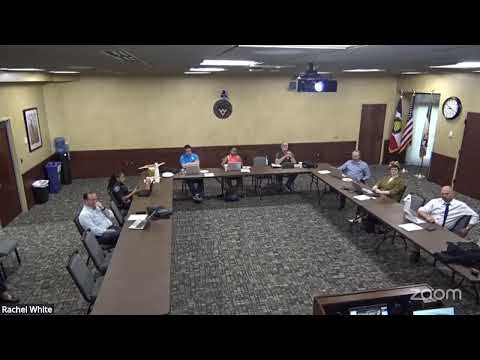
The West Valley City Professional Standards Review Board (PSRB) heard a training briefing from outside counsel Heather White on a recent U.S. Supreme Court decision, Barnes v Felix, and the implications for how the board and department review officer uses of force.
The West Valley City Professional Standards Review Board (PSRB) heard a training briefing from outside counsel Heather White on a recent U.S. Supreme Court decision, Barnes v Felix, and the implications for how the board and department review officer uses of force.
White told the board the high court unanimously rejected a narrow —moment-of-threat— approach and directed courts to consider the totality of circumstances under Graham v. Connor when evaluating whether an officers use of force was reasonable. "Prior events may show, for example, why a reasonable officer would have perceived otherwise ambiguous conduct of a suspect as threatening, or instead they may show why an officer would have perceived the same conduct as innocuous," White said.
Why this matters: the ruling clarifies that events leading up to a use-of-force incident can be relevant to whether force was justified. That affects both judicial review and the PSRBs administrative assessment of incidents the board examines.
White summarized the facts of the case as presented by the Supreme Court: an officer initiated a traffic stop for violations, asked the driver to open the trunk, the driver started the car, the officer partially entered the vehicle and ordered it not to move, and within about two seconds the officer fired two shots that killed the driver. The Supreme Court did not decide whether the officers conduct was reasonable; it remanded the case for factual determination while instructing courts not to confine analysis to only the instant the force was used.
White told board members the decision aligns with long-standing guidance in the Tenth Circuit and with the Graham v. Connor standard requiring a totality-of-the-circumstances analysis. She added that some other circuits have applied a —creation-of-the-threat— rule (whether officers actions created the need to use force) and that question remains unresolved at the Supreme Court level. "If an officer, by their actions, increases the need for a use of force where otherwise it wouldn't have been necessary, that can weigh against an officer," she said, while noting the Supreme Court did not resolve that precise issue in Barnes.
White emphasized practical implications for both officers and reviewers. She recommended that officer reports document not only what happened but why officers acted as they did: what the officer perceived, the sequence of events leading to force, relevant training the officer had received, and subtle observations not captured on video (tone, body language, contact). "Help us to feel what it was like to stand in your shoes at that moment," White said, urging detailed report writing to fill gaps that video evidence may leave.
She also told the PSRB the presentation would be recorded and provided to the police department's training system, and that she would send a copy of the Barnes decision to the city attorney for distribution to board members.
The meeting contained two formal procedural actions: the board moved to adopt the minutes from the prior meeting and later voted to convene a closed session. The minutes adoption carried an abstention from a member who said they had not attended the prior meeting; the motion to go into closed session passed.
The training portion of the meeting was discussion and instruction only; the PSRB did not adopt any new policies or issue formal findings during the open session portion covered in this briefing.
Board members and counsel flagged the continuing importance of report quality and of considering events leading up to force when the PSRB reviews incidents, but made no change to the boards review standards during the session.