Get Full Government Meeting Transcripts, Videos, & Alerts Forever!
Get email alerts on the Higher Education Nontraditional Learners topic
No spam. Unsubscribe anytime.
PHEAA podcast highlights barriers and resources for nontraditional college students
Summary
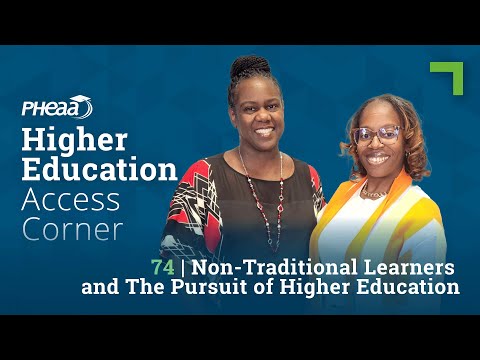
The Pennsylvania Higher Education Assistance Agency's (PHEAA) podcast Higher Education Access Corner featured Tiffany DeVan and Lauren Bowman in a conversation about the challenges and supports for nontraditional learners.
The Pennsylvania Higher Education Assistance Agency's (PHEAA) podcast Higher Education Access Corner featured Tiffany DeVan and Lauren Bowman in a conversation about the challenges and supports for nontraditional learners. Bowman, a PHEAA employee who graduated with an associate degree in 2023 and is completing a bachelor's in organizational leadership through Penn State World Campus, described a years-long journey of starting, pausing and returning to higher education.
Why it matters: Many adult learners delay, interrupt or return to college because of cost, caregiving responsibilities and time constraints. PHEAA and federal resources can reduce those barriers, but Bowman and DeVan emphasized that learners must ask questions and connect with financial-aid offices to understand what aid is available.
Bowman began her postsecondary work in 2005 at Coppin State University and later attended Central Penn and Harrisburg Area Community College, describing repeated stops when family or debt intervened. "I am a self proclaimed career student," Bowman said. She said her inability to pay an outstanding bill early in her college career led her to pause and work; years later she returned, earned an associate degree in business administration in 2023 and expects to finish her bachelor's in December 2025. "Believe in yourself and do your research," Bowman told listeners. "You have to start somewhere."
DeVan and Bowman laid out specific financial and practical steps for adult learners. They pointed listeners to the Free Application for Federal Student Aid (FAFSA) and the federal StudentAid website (studentaid.gov) for federal grant and loan information, and to PHEAA's site (pheaa.org) for Pennsylvania grant opportunities. DeVan said, "For non traditional students, we mean those students who are older than 24," and added that many resources aimed at traditional students still apply to adult learners. Bowman underscored the value of developing a relationship with a school's financial-aid adviser: "Literally every semester, I reach out; it's one person that I just kinda grew a relationship with over time."
Both hosts emphasized nonfinancial supports: setting boundaries, communicating with family, and attending to mental health. Bowman recommended time management and clear communication at home: "Be honest. I think from my case, being transparent and being honest help that portion of our relationship a lot." The pair noted employers' tuition-reimbursement programs and local scholarships as underused supports. DeVan added that some students may qualify for childcare costs under certain types of financial aid and urged learners to check campus and employer programs.
Practical cautions were raised: Bowman warned that returning students should watch aggregate federal loan limits and not assume they can borrow indefinitely. She described costs beyond tuition that affect major choice: lab fees, books and travel. "The school that you go to, for one, your major for two, I didn't know that majors cost different," Bowman said.
The conversation closed with Bowman planning graduate study in higher education after completing her bachelor's. The episode aimed to normalize nontraditional paths and to encourage returning students to research aid, lean on advisers, and use available institutional and employer resources.