Get Full Government Meeting Transcripts, Videos, & Alerts Forever!
Get email alerts on the Wildfire Preparedness topic
No spam. Unsubscribe anytime.
South Thurston wildfire plan presented to Yelm Planning Commission; plan nonbinding, stakeholders urge local action
Summary
Consultants supporting the Thurston Conservation District presented a draft Community Wildfire Protection Plan (CWPP) for South Thurston County to the Yelm Planning Commission on June 17, emphasizing collaborative fuel reduction, homeowner-focused structural hardening and nonbinding recommendations.
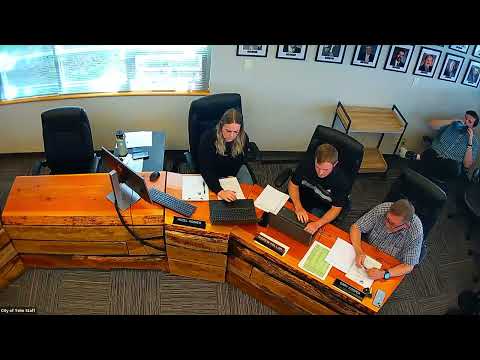
Yelm — Consultants supporting the Thurston Conservation District presented a draft Community Wildfire Protection Plan for South Thurston County at the Yelm Planning Commission meeting on June 17, outlining prioritized fuel-reduction projects, public outreach, and recommended emergency planning.
Haley Morris, of Ross Strategic, told commissioners the CWPP is “a collaborative community effort to determine, prioritize, and plan actions that protect life, property, and infrastructure from wildfire.” She said the plan sets recommended, not mandatory, actions and “is not a legally binding document.”
The plan area covers the southern portion of Thurston County, which the Thurston Regional Planning Council identified in its 2024 Hazard Mitigation Plan as having the county’s highest wildfire risk. Morris said the stakeholder group prioritized three project types: fire-adapted community outreach and education, fuel-reduction treatments (small and large scale), and wildfire-response coordination led by the Department of Natural Resources and local fire districts.
Morris summarized outreach and technical work: five stakeholder meetings, two community engagement sessions, and a community survey. She said stakeholders recommended annual check-ins for minor updates and a five-year major update cycle, “pending funding.” The CWPP uses a project prioritization of high, medium and low; Morris said some projects rated “high” are expected to be one- to two-year efforts while others may take longer.
Commissioners pressed for details on official maps and responsibilities. A commissioner asked about a DNR-produced urban wildland interface map meant to inform land-use decisions; Morris replied that DNR has produced a map but “there’s been a lot of issues with this map” and a new version is under development with no firm release date.
Morris cited local example projects that could affect Yelm: a Wildfire Ready Neighbors launch hosted April 26 by the Southeast Thurston Fire Authority to promote home-hardening programs, and a recommendation to partner with Thurston County Emergency Management to identify primary and secondary evacuation routes in the fire authority’s service area.
Gary Cooper, planning and building manager, framed the item as timely because the Growth Management Act recently added wildfire goals and policies for comprehensive plans; he said the CWPP’s recommendations will appear in the commission’s forthcoming packet of materials. Commissioners and presenters agreed the plan’s success depends on funding and cross-jurisdictional collaboration.
Morris closed by offering to provide contact information for follow-up; she and a colleague, Elizabeth, left after the presentation. Commissioners did not take formal action on the CWPP at the meeting; discussion was recorded for input ahead of next month’s packet.