Get Full Government Meeting Transcripts, Videos, & Alerts Forever!
Get email alerts on the Grading Policy topic
No spam. Unsubscribe anytime.
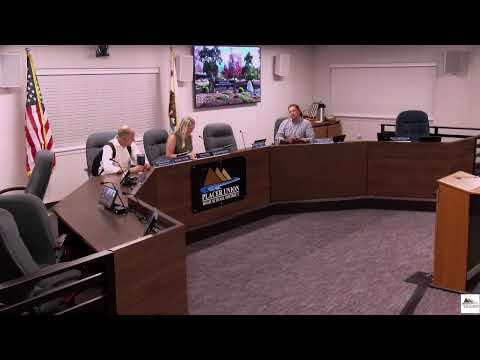
Placer Union trustees adopt revised grading policy after hours of debate, 4-1
Summary
After more than three hours of discussion and public comment, the Placer Union High School District Board voted 4‑1 to adopt a revised grading and evaluation policy that emphasizes essential learning objectives and limits unlimited retakes.
The Placer Union High School District Board of Trustees voted 4‑1 to adopt an updated grading and evaluation policy (BP 5121) after a lengthy public and board discussion.
The policy directs teachers and departments to identify essential learning objectives (ELOs) for each course and requires those ELOs to make up a substantial portion of a student’s course grade. The board version adopted on Tuesday leaves other course‑level grading decisions — including how to weight projects, participation and formative work — primarily to teachers and departments, while setting districtwide guardrails on retakes and conversion to letter grades.
Supporters said the new policy strikes a balance between student mastery and classroom autonomy. Board members who backed the measure said it gives teachers clearer expectations while restoring a single, districtwide system after a period in which several grading approaches were used simultaneously across sites.
Opponents raised concerns that the policy as drafted was too prescriptive in parts and that the chosen split between ELOs and other graded work (the draft specified a 50/50 split) could disadvantage students in courses where performance looks different. A trustee who voted no said the measure needed more time and clearer administrative rules before becoming district policy.
Several teachers, parents and students addressed the board during the meeting. Some urged the board to preserve teacher autonomy and to allow teachers who have developed functioning four‑point/proficiency systems to continue using them; others called for more emphasis on mastery and clearer paths for students who struggle on initial assessments.
After the vote the board directed district staff and bargaining partners to continue collaborative work on the implementing administrative regulation so that local departments and sites have time to prepare and to translate policy language into uniform reporting in the student information system.
Implementation timeline: the board approved the policy as the district’s guiding framework and asked staff to return to the board with a recommended implementation timeline and administrative rules; district leaders said they will present details of an AR and rollout plan in coming weeks.