Get Full Government Meeting Transcripts, Videos, & Alerts Forever!
Get email alerts on the Broadband Deployment topic
No spam. Unsubscribe anytime.
GoNet Speed seeks permits to bury fiber past utility poles as part of $14M Springfield build
Summary
GoNet Speed told a Springfield City Council committee it plans a privately funded phase 1 to pass about 13,000 locations with roughly $14 million in investment, and requested underground permits (seven presented) to avoid pole-replacement delays; the committee agreed to move the permits to the full council for consideration on July 14.
SPRINGFIELD, Mass. — GoNet Speed requested city permits June 17 to bury fiber past select utility poles in order to accelerate construction of a privately funded fiber network that the company says will pass roughly 13,000 locations in Springfield.
The request came during a meeting of the Springfield City Council digital equity working group, convened by Councilor Jose Delgado. GoNet Speed representatives gave an overview of their planned phase 1 build, described seven specific underground permit locations in a “Charlie 1-1” area and said the company has filed in total 27 site petitions across three study areas. Committee members agreed to forward the permits to the full City Council for consideration at the July 14 meeting.
Why it matters: The company’s proposal ties directly to the city’s digital equity review and to residents who lack reliable home internet. GoNet Speed said it will invest private funds for the initial phase, offer library connections and device support, and pursue further expansion depending on permit timing and pole-owner “make-ready” work that GoNet Speed said is largely out of its control.
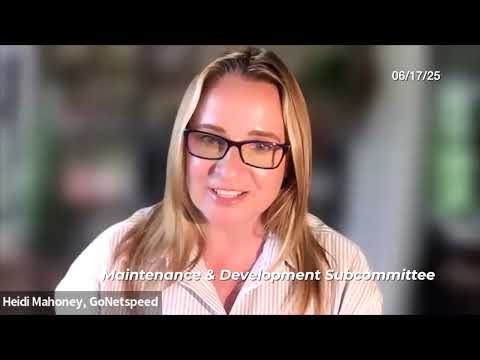
GoNet Speed representative Heidi Mahoney described the company as a large private fiber provider. “Go Net Speed is the largest privately owned fiber service provider in the Northeast currently,” Mahoney said. She told the committee the Springfield phase 1 would pass “approximately 13,000 locations” and is “an approximate $14,000,000 investment.” The company said the phase includes about 110 miles of primarily aerial fiber and that the project began in 2024.
Company officials said they prefer aerial construction but requested targeted underground work “to save some cost, mainly timeline” and to avoid lengthy pole replacements by the utility. Ben Madden, the GoNet Speed permitting lead, summarized the permit rationale: burying cable “past a pole 2, maybe 3” is proposed where Eversource-likely pole replacements would otherwise delay customer connections. Ray Vasquez, GoNet Speed construction manager, and GoNet Speed staff said Hector Bennett of Springfield’s Department of Public Works walked the sites with them.
On timing, Mahoney said the company forecasts the phase 1 build could be complete by the end of the year or in the first quarter of the following year “depending on when we get those licenses and the make ready gets complete by the pole owners.” The company noted those approvals and make‑ready work are often outside the company’s direct control.
Public-benefit commitments discussed included free connections for libraries (for up to three years, limited to libraries within the new network footprint), five city‑controlled connected devices for distribution at the city’s discretion, and discounts for schools and municipal buildings within the network. Mahoney also said GoNet Speed participates in Lifeline and would re‑engage in an ACP‑style program if federal support returned. “If there were another low income plan like ACP, we would 100% participate in that,” she said.
Committee members raised questions about phased coverage and affordability for low‑income households. Councilor Delgado, who said he chairs the working group, emphasized concern that a phased build not leave economically disadvantaged neighborhoods without service. GoNet Speed said phase 2 or 3 could expand coverage if demand and permitting costs make it feasible; the company indicated it would engage in further planning or a city RFP if the city pursued full-city coverage.
Next steps: Committee members asked DPW to submit the current set of petitions to the city clerk; the committee agreed to forward the presented permits to the full City Council, with the next council meeting scheduled for July 14. No formal committee vote on the permits was recorded during the meeting.
The meeting included additional technical details about the specific streets and poles in the Charlie 1-1 area (Parker Street and adjacent streets, Jordan Street, Durant Street and others), and GoNet Speed staff said the 27 total petition locations are distributed among the company’s Charlie 1-1 (7 petitions), Charlie 2 (6 petitions) and Delta 2 (14 petitions) study areas. DPW engineering staff said most proposed underground pulls are roughly 300–400 feet from pole to pole.
The company framed the Springfield work as privately financed, noting it did not receive municipal broadband extension grants through the MBI program for this phase and that it also won out‑of-region grants for other expansions. The company said local field technicians will come from an Agawam warehouse and that parts of the build will rely on existing aerial plant tied to neighboring towns.
The meeting record shows the committee will return the permits to the full council for scheduling; GoNet Speed officials and city staff indicated they will continue to coordinate site walks and additional petitions as needed.