
Brown Deer trustees consider zoning change to allow adult day care in B‑3/B‑4 districts
Get AI-powered insights, summaries, and transcripts
Subscribe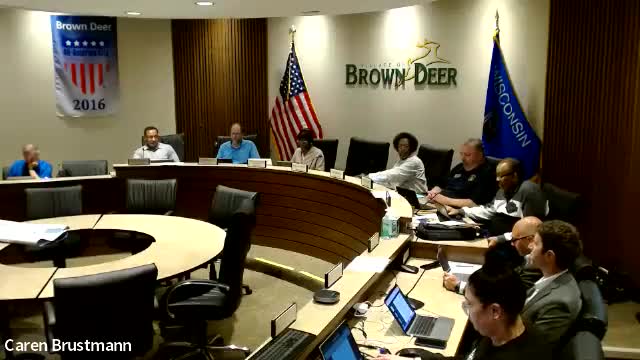
Summary
The Board considered an ordinance to add adult day care as a permitted use in commercial B‑3 and B‑4 districts, a change planning staff recommended to allow an applicant to locate an adult day care at a West Brown Road office building; trustees debated outreach to nearby businesses and several members voted no or abstained.
The Brown Deer Board of Trustees considered an ordinance to allow adult day-care facilities as a permitted use in the village’s B‑3 and B‑4 commercial zoning districts, a change planning staff recommended after the Plan Commission forwarded the item with a majority recommendation.
Why it matters: the change would let adult day-care businesses seek licensing and occupancy without first obtaining a conditional‑use permit, potentially speeding openings by applicants who meet state licensing and local occupancy requirements.
Planning staff described one pending application from "Miss Winarda Milborne" (transcript spelling) to occupy a lower‑level office space at 5050 West Brown Road east of Taco, serving adults 18 and over with up to 24 participants and up to four employees. "She does wanna occupy a lower level, with up to 24 adults 18 and over, and up to 4 employees," the planning staff said. The space described is about 1,200 square feet; Department of Health Services (DHS) rules require 50 square feet per participant, which would allow up to 24 occupants in that suite.
Staff and the Plan Commission concluded adult day care is different from child day care and generally poses fewer land‑use concerns (hours, outdoor play areas and pick‑up/drop‑off logistics) and therefore recommended making it a permitted use in the B‑4 district; staff also proposed the same change for B‑3. "This particular 1 is operating... 8 to 04:30. It's adults generally with disabilities or in need of added assistance," planning staff said.
Trustees and community members raised outreach and oversight concerns. One trustee, who voted against approval at the Plan Commission, said businesses near the proposed site were not directly notified before the Plan Commission meeting and that lack of outreach informed their opposition. "When we go through this type of only change, we should notify individual businesses that was close by," a trustee said. Another trustee asked whether the village can or does limit the number of community‑based residential facilities; planning staff said Wisconsin statute provides limits for certain community‑based residential facilities but that the statute does not contain the same limit for adult day‑care facilities.
Applicant testimony on operations was brief. When asked what activities would take place at a day‑care setting, the applicant said: "During the day, I plan to do activities with the client. We can do exercise with the clients. Mainly, it's like, you know, a regular day care, when their a, guardian, have to work or something, so they drop off their person that in need of help, while they at work."
Board action: a trustee moved to approve the ordinance to amend the B‑3 and B‑4 districts to allow adult day care as a permitted use; the motion was seconded. The transcript records mixed votes and abstentions and does not clearly record a final approved/failed outcome in the segment provided. The record shows multiple trustees voting both "aye" and "no" on the motion; the transcript does not provide a definitive final tally or chair announcement of the ordinance's passage in the recorded excerpt.
Next steps and requirements: if the zoning text is amended, an adult day‑care operator still must obtain state licensure from DHS and local occupancy approval from the village inspection and fire departments before opening. Planning staff noted typical commercial rents in B‑3/B‑4 likely limit proliferation of such facilities because most commercial space will be too costly for many adult‑day operators.
Ending: Trustees asked staff to consider improved outreach to nearby businesses for future zoning‑text amendments and to clarify limits and oversight for related residential facilities in conversations with state DHS.