Get Full Government Meeting Transcripts, Videos, & Alerts Forever!
Get email alerts on the Student Transportation topic
No spam. Unsubscribe anytime.
School committee discusses summer pilot for bus stop‑arm camera enforcement
Summary
The committee reviewed a proposal to pilot leased stop‑arm cameras on large school buses this summer to document and deter motorists who pass stopped school buses; the devices would support civil penalties, with monitoring and initial review handled by contracted vendors and police.
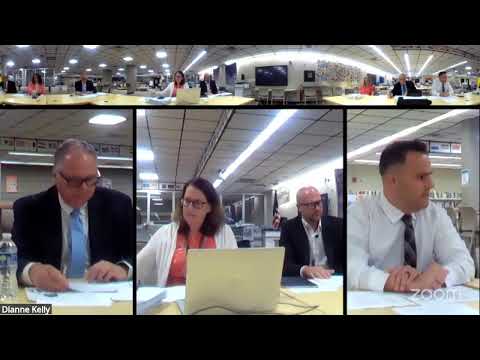
The Revere School Committee discussed adopting a pilot program of stop‑arm camera systems on large school buses to record and deter motorists who illegally pass stopped school buses, a proposal the chair said could be ready for September if the summer pilot proceeds.
The proposal, introduced during the Committee of the Whole meeting on June 17, would use leased equipment installed by private vendors and charged to the city under monthly fees (the presenter said about $100 per bus per month) plus a fee-per‑ticket arrangement. The program is intended to generate civil penalties — not criminal charges — similar to a parking citation; the transcript said an identified police officer would review suspected violations before enforcement is issued.
Chair John Kingston said the city council already adopted an ordinance authorizing the technology and that the next step is for the school committee to agree to use the systems on district buses. “The city council has already adopted the legislation to allow the city to, install this technology,” he said. He described the vendor model: the vendor monitors footage, applies redaction for faces and license plates, and coordinates issuance of citations through the city’s processes.
Why it matters: school‑bus stop‑arm violations put children at risk. Committee members cited pilot results from nearby cities that found high counts of monthly violations on some routes. Proponents said a pilot would provide local data to determine whether the program reduces violations and unsafe driving near stopped buses.
Details and safeguards: committee members said vendors have automated redaction so images released for enforcement would not include unredacted faces; the presenter said license plates and faces are redacted automatically. The vendor would provide monitoring and initial processing; a police officer must confirm a violation before a citation is issued. The committee was told the vendor typically can outfit a bus in a few hours and that some companies can provide sample data after a short pilot of one or two routes.
Concerns and next steps: the school transportation union asked to be part of the process; committee members said they would include the union, the superintendent’s office, the police department and the city’s parking department in discussions. No formal vote to adopt the pilot was recorded in the meeting; the chair said he would work with district staff (Diane) and pursue a pilot agreement and requested permission to move forward. One committee member said, “I say go for it,” when asked whether to proceed.
The committee agreed to pursue further information, run a short pilot this summer on one or two large bus routes, and return to the committee with sample data and a recommended contract procurement approach before any full implementation in September.