Get Full Government Meeting Transcripts, Videos, & Alerts Forever!
Get email alerts on the Fiscal Affairs Assets Procurement topic
No spam. Unsubscribe anytime.
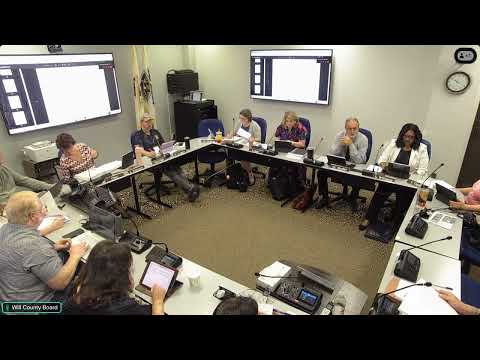
Will County committee advances fiscal affairs code after debates over asset tracking, procurement and payment fees
Summary
The committee moved Chapter 40 (Fiscal Affairs) forward as amended on June 10 after extended discussion about asset tracking, procurement thresholds, credit-card fees and inventory procedures; members directed staff and leadership to inventory existing systems and return with options.
The Will County Ordinance Review Committee voted June 10 to advance Chapter 40 (Fiscal Affairs) as amended after extensive discussion on asset tracking, procurement rules and payment methods.
The committee approved the chapter by voice vote. During debate members focused on three practical topics: whether the county's enterprise system (D365) can and should be used to track capital and minor assets; existing thresholds for recording items (the draft manual treats assets at or above $1,000 and below $5,000 as "minor assets"); and procurement thresholds that trigger formal bidding (the committee discussed the practical effect of the $30,000 statutory threshold used for bid requirements). The clerk's and auditor's offices and finance staff were asked to report back with specifics about current capabilities and how the county could expand inventory tracking.
Members also discussed routine fiscal details in the proposed chapter: a minimum petty-cash advance of $100, the county's civil-union filing fee of $35, and a $35 fee for annual attorney courthouse ID cards. The group discussed high credit-card fees for large tax payments and asked staff to explore lower-cost electronic alternatives (ACH/e-check) and whether debit-card flows could reduce processing charges.
Why it matters: committee members said better asset tracking and clearer procurement rules would reduce last-minute budget requests and help the board forecast capital replacement needs for vehicles and equipment. Several members asked staff and leadership to check whether D365 (the county's finance system) already contains asset-management modules that can be expanded or, alternatively, whether an add-on is needed. The committee agreed to request reports from finance, purchasing and the county executive before making further code changes.
The committee passed Chapter 40 as amended and directed staff to follow up with finance and purchasing to report implementation options and recommended thresholds.