Get Full Government Meeting Transcripts, Videos, & Alerts Forever!
Get email alerts on the Wastewater Agriculture Winery Composting topic
No spam. Unsubscribe anytime.
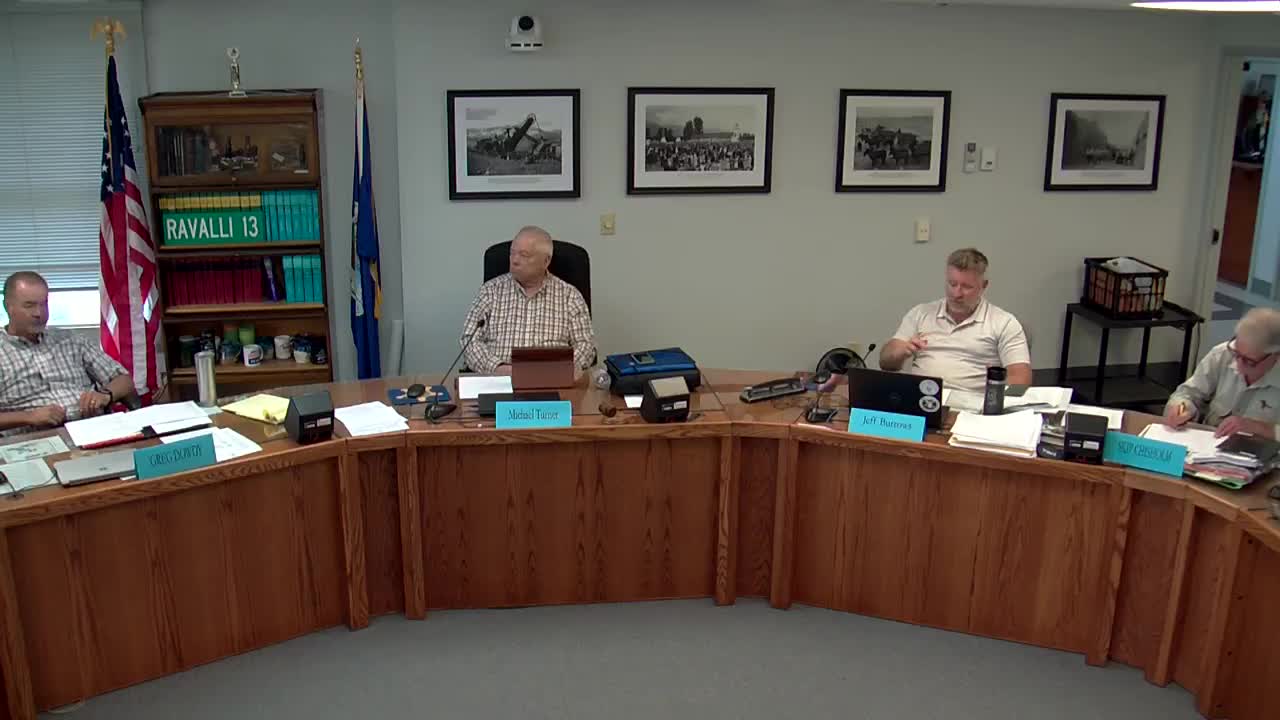
Ravalli County Board of Health allows Willow Mountain Winery to reuse wash water as agricultural byproduct under conditions
Summary
The Ravalli County Board of Health decided June 11 that Willow Mountain Winery may apply grape wash water (grape solids and water) to an on-site compost pile as an agricultural byproduct rather than as gray wastewater, provided the operation follows a written operational plan and limits described by the board.
The Ravalli County Board of Health on June 11 voted to treat willow Mountain Winery's processing wash water as an agricultural byproduct rather than regulated gray water, allowing the winery to meter grape solids and hot water onto a compost pile under specific conditions.
Board members said the decision clears a regulatory roadblock the winery faced while seeking a food-manufacturing/public-accommodation license. Board member Mick moved to exempt the winery's described process; Greg Gowdy seconded the motion. The motion passed with all present members voting in favor.
The board emphasized narrow limits. Dr. Turner said the board would “only” permit grape solids and water to be applied and said the operation should be treated as an agricultural byproduct, not gray wastewater. Staff and members listed several conditions to reduce groundwater and public-health risk: the county will attach the winery's November 13, 2024 operational description to the approval; the practice must remain strictly as described; any change in process or a sustained increase above the board’s estimated 4,012 gallons per year requires the owner to return to the board with new information; the allowance applies to the current ownership and may not automatically transfer without board review. The board also said required documentation should be included on the winery’s licensing paperwork.
County staff noted potential technical concerns the board wanted addressed in writing: that the wash stream be free of detergents or other chemicals, that distances to wells and other sensitive features meet county setbacks, and that the owner provide an annual estimate and reporting threshold so the board can reassess if volumes or constituents change. Chris (legal counsel) and staff will draft a letter formalizing the board's findings and the permit conditions and will circulate it to board members for review.
The board said its action is specific to the Willow Mountain Winery process and location; members repeatedly framed the motion as a narrowly scoped, fact‑based finding to avoid creating an open-ended precedent for unrelated industrial discharges.
The board’s action: staff will issue a letter documenting the exemption and attaching the winery's November 13, 2024 process description as a condition of the license; the owner must notify the board and supply data if the operation exceeds the board’s projected annual volumes or alters the wash process.