Get Full Government Meeting Transcripts, Videos, & Alerts Forever!
Get email alerts on the Childcare Policy topic
No spam. Unsubscribe anytime.
Council introduces bills to expand child-care property tax credit and clarify coordinating entity roles
Summary
The council introduced a bill to increase the child-care property tax credit and a companion measure to reauthorize and clarify the early care and education coordinating entity’s responsibilities, citing a decline in licensed providers and the need to strengthen child-care infrastructure.
Montgomery County Council members introduced two measures on June 17 to bolster child-care capacity: an expansion of a property tax credit for child-care providers and a reauthorization and role-clarification for the county’s Early Care and Education Coordinating Entity.
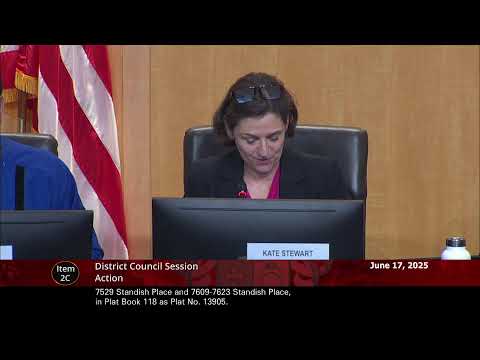
Council President Kate Stewart, the lead sponsor of expedited bill 21‑25, said the proposal would increase the maximum property tax credit for child-care facilities from $3,000 to $10,000, remove an outdated post‑1987 eligibility restriction, and expand eligibility to large family child-care homes that serve nine to 12 children. Stewart cited a Comptroller’s report that the county has lost 15.5% of licensed providers and more than 1,000 home‑based providers in recent years, reducing options and increasing wait lists for families.
Separately, Councilmembers Albinaz and Vice President Jiwando co‑sponsored expedited bill 23‑25 to reauthorize the early care and education coordinating entity and to clarify roles between the entity and the Department of Health and Human Services. Councilmember Albinaz said the coordinating entity has been “doing extraordinary work” since its creation roughly four years ago but that the legal language needs to better reflect the original intent and clarify responsibilities so future councils and executives understand who does what.
Stewart and council sponsors tied the proposals to recent state action: the transcript cites state legislation (HB389) that enables counties to modernize and expand local tax-credit authority. Sponsors said the county-level changes are intended to provide targeted tax breaks for existing and new providers, support operations, and continue incentives for facility construction.
Both bills were introduced for committee consideration; public hearings are scheduled as indicated in the council packet. Sponsors emphasized the measures are intended to strengthen the county’s child‑care infrastructure, support providers’ financial viability, and improve access for families, while committee deliberations will determine final details and eligibility rules.