Get Full Government Meeting Transcripts, Videos, & Alerts Forever!
Get email alerts on the Volunteer Fire Departments topic
No spam. Unsubscribe anytime.
Volunteers and chiefs urge clearer charter rules, funding authority for Butte‑Silver Bow fire services
Summary
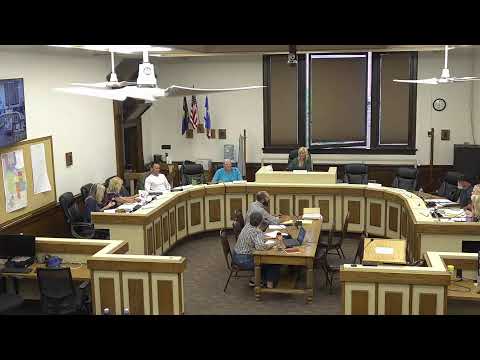
Volunteer fire chiefs, elected trustees and legal counsel urged the Butte‑Silver Bow study commission on Monday to clarify the county charter’s treatment of volunteer fire districts, saying unclear governance and budget authority have left equipment and training underfunded and coordination with the paid fire department strained.
Volunteer fire chiefs, elected trustees and legal counsel urged the Butte‑Silver Bow study commission on Monday to clarify the county charter’s treatment of volunteer fire districts, saying unclear governance and budget authority have left equipment and training underfunded and coordination with the paid fire department strained.
The discussion drew chiefs from Racetrack and Boulevard fire districts, dozens of questions from study commissioners and a legal briefing from attorney Catherine “Kate” Dimwiddie, who advised the commission that Montana law treats rural fire districts as independent public entities with statutory powers and budget authority.
The issue matters because volunteer districts supply much of the county’s fire response and currently operate under different statutory schemes than the paid city‑county fire department. That legal separation, officials said, affects whether volunteers can levy their own taxes, how apparatus and station repairs are prioritized, and who is responsible for training standards and mutual‑aid agreements.
Racetrack Rural Fire District chief Gary Mattern (Racetrack Rural Fire District) told commissioners his department has 25 active members and has relied on federal SAFER Act grants for apparatus, but still faces frequent equipment and maintenance gaps. "Money comes out of my pocket for my department, a lot," Mattern said, describing volunteer purchases and long repair delays for engine 77. He also described multi‑hour volunteer responses to regional fires and said volunteers routinely pay for or personally maintain gear when no budgeted funds are available.
Boulevard Fire Department chief Ed Fisher (Boulevard Fire Department), president of the Silver Bow Fire Council, said the underlying problem is that the county has not settled who has final administrative responsibility. "We can't fix what we don't know what we're trying to fix," Fisher said, calling for a clear decision about whether the county executive, a neutral coordinator, or district trustees should have the authority to resolve equipment and funding disputes.
Dimwiddie, who represents volunteer districts and teaches trustees statewide, advised the commission that the charter as written creates ambiguity. "Butte Silver Bow is the only county in Montana that treats its fire districts this way," she said, noting that state statutes (Title 7, Chapter 33, parts 21, 23 and 41) set different rules for rural fire districts, fire companies and municipal (paid) departments. She told the commission the charter must either expressly subordinate districts to the county’s ordinance authority or else preserve the districts’ statutory independence and budget authority.
Commissioners and chiefs discussed three high‑priority operational problems volunteers listed: communication, equipment maintenance and training. Mattern said communication between volunteer districts and the director of fire services has been irregular, and that collaboration through the county’s fire council and fire advisory board has been inconsistent. On equipment he provided examples: an engine that has been unreliable for eight years, a station roof that took five years to replace and Internet service that took four years to restore. He said fit‑testing for SCBA masks and replacement turnout gear remain budget gaps.
Several commissioners asked practical questions about governance and taxes. Commissioner Chad Silk pressed whether a district could run an independent mill levy if the commission rewrote charter language to give trustees budget authority; chiefs said they lacked recent budgets and could not say for certain how much revenue an independent levy would raise, but described precedent from pre‑consolidation budgets. County Attorney Enruth confirmed the commission has authority to change charter language but noted some statutory limits and that prior attorney‑general opinions have constrained budgetary authority in the past.
Discussion returned repeatedly to options the commission could recommend to voters: (1) explicitly recognize volunteer districts as independent political subdivisions under state statute and leave trustees’ budget authority intact; (2) revise the charter to place all fire services—paid and volunteer—under a single county authority (meaning ordinances and county budgeting would control); or (3) create a new neutral liaison/commission structure (a fire coordinator or commission) outside any single station that would manage shared priorities and purchases.
Chiefs stressed that any change would have trade‑offs. Mattern and Fisher both said volunteers and the paid fire department rely on mutual aid, and both warned that fully separating finances without clear transition plans could harm response capability. Mattern noted his district’s historical service and use of federal grants and donations—"we are currently the home of Engine 77, a 2006 Spartan purchased on a federal grant"—and said volunteers continue to fill essential response roles.
Dimwiddie suggested the commission could make charter changes that remove ambiguity without forcing an immediate, wholesale structural shift: either return budget authority to trustees in clear charter language, or explicitly move fire governance into the county ordinance framework and explain the financial consequences to voters. She also described statutory tools for consolidation of fire districts and emerging statewide proposals (a fire authority model) that could allow multiple jurisdictions to pool resources without eliminating local trustees.
The commission set follow‑up steps. Commissioners asked the county attorney to collect targeted legal answers to specific charter language questions; the commission set a deadline for written questions to the county attorney (July 16) and tentatively scheduled a special session to review charter questions later in July. The commission also announced outreach plans and a public information campaign so voters can understand potential tax and service impacts before any ballot measure.
Votes at a glance A motion to approve the minutes of the meeting held 06/09/2025, as amended, was moved (mover not specified in the record), seconded by Commissioner Cindy Perdue Dolan and approved by voice vote. The motion passed.
What to watch - Charter language the commission drafts to resolve whether trustees or county ordinance will have final budget authority for volunteer districts. - Any recommendation to place a fire coordinator/commission in the charter as a neutral administrative body outside a specific station. - Treasurer and county attorney analysis of how district mill levies or a shifted urban fire fund would affect local taxes and response funding.
Ending Commissioners said they will continue the conversation at future meetings, collect written legal opinions and financial estimates, and hold public outreach as they draft charter language to present to voters. Several chiefs asked the commission to prioritize near‑term fixes for equipment maintenance, standardized training and more regular communication while structural questions are resolved.