Get Full Government Meeting Transcripts, Videos, & Alerts Forever!
Get email alerts on the Consolidated Plan And Federal Funding topic
No spam. Unsubscribe anytime.
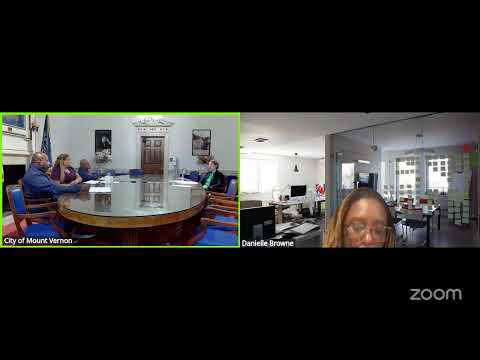
Mount Vernon URA approves consolidated-plan actions, fiscal policy and funding for station repairs and housing projects
Summary
The Mount Vernon Urban Renewal Agency voted to advance its 2025–2029 consolidated plan and a package of resolutions on June 17, including adoption of a fiscal policy, appointment of an executive director, funding for fire station repairs and a $600,000 conditional HOME commitment to a senior housing project.
The Mount Vernon Urban Renewal Agency voted 4–0 with one absence on June 17 to approve a package of resolutions authorizing the agency to administer HUD-funded programs for the coming year, adopt a fiscal policy, appoint an executive director and allocate federal funds for infrastructure, housing and emergency displacement assistance.
The consolidated plan under discussion is the five-year strategic plan covering 2025–2029; the URA also presented the 2025 annual action plan and opened a public comment period that began in early June and runs through July 7. P. Tarlow, URA staff member and presenter, said the plan is available on the URA website and that "I will incorporate everyone's comments and questions into the final document. I can't say where we'll go from there, but I do know that every single comment will be read and counted." The URA expects to hold two more public hearings before submitting the final consolidated plan to HUD.
Why this matters: the consolidated plan and annual action plan set how HUD entitlement funds are prioritized locally. The URA told members it is rebalancing earlier plans to reflect changes in funding tools and federal allocations, and it presented a funding breakdown for the agency's HUD entitlements.
Key budget and program details the URA reported: the plan incorporates roughly $1.55 million in Community Development Block Grant (CDBG) funds and a little under $600,000 in HOME Investment Partnerships Program (HOME) funds. The presenter described the CDBG breakdown as approximately $310,000 for administration, $1.1 million for public facilities and infrastructure improvements, and $100,000 set aside for public services (with flexibility to move that money to infrastructure if needed). HOME-program line items shown by the URA included about $59,000 for administration, an $89,000 CHDO (Community Housing Development Organization) set-aside, and roughly $443,000 for development activity.
P. Tarlow said the consolidated-plan change was driven in part by the agency moving away from using Section 108 debt financing “because the president has requested 0 funds go to CDBG next year,” a constraint the presenter said would make using future CDBG collateral imprudent.
Resolutions approved as a block included: resolution 2025-12 appointing an executive director (the presenter noted the position title change to deputy commissioner and asked the board to ratify the executive director role); adoption of a written fiscal policy to codify fiscal controls and segregation of duties; authorization to exercise recapture provisions on a Tenth Avenue home project to recover about $100,000 for reuse; conditional approval of a $600,000 HOME commitment for a Wartburg senior-housing project (the agency said the commitment is contingent on the project securing its other funding and completing environmental review and deed restrictions); a request to allocate funds for repairs at Fire Station No. 3 (an internal stairwell, roof and pointing), driveway approaches at Fire Stations No. 1 and No. 2, and concrete repairs at the Sydney Parking Structure; approval of a $16,000 pilot emergency-displacement program using CDBG-CV funds for hotel vouchers; and authorization for staff to continue participating in the Continuum of Care program and for the chair to sign HUD agreements.
The URA framed these infrastructure requests as targeted repairs rather than broad capital projects, with the presenter saying the agency is "trying to be smart and target a station at a time, a project at a time that we believe will increase the quality of life of the folks that live in that station 24 hours a day." The Wartburg commitment was presented as an 8-unit project that would keep units at or below 60% area median income and extend deed-restriction affordability from 50 to 75 years, with an agreement to market units to Mount Vernon residents.
The board moved to take the resolutions as a single block. Roll-call on the block vote was Chair Patterson Howard—aye; Vice Chair Brown—aye; Treasurer Spruill—aye; Assistant Treasurer Morton—absent; Member Johnson—aye. The motion passed.
The URA also noted that the consolidated plan largely mirrors the prior plan aside from the financing approach and that the full plan is roughly 200 pages. Agency staff said any board comments would be incorporated into the HUD submission after the public hearings conclude.
Next steps: public comments close July 7, two additional public hearings will be held as part of the consolidated-plan process, and staff will finalize and submit the consolidated plan and associated annual action plan to HUD after those hearings.